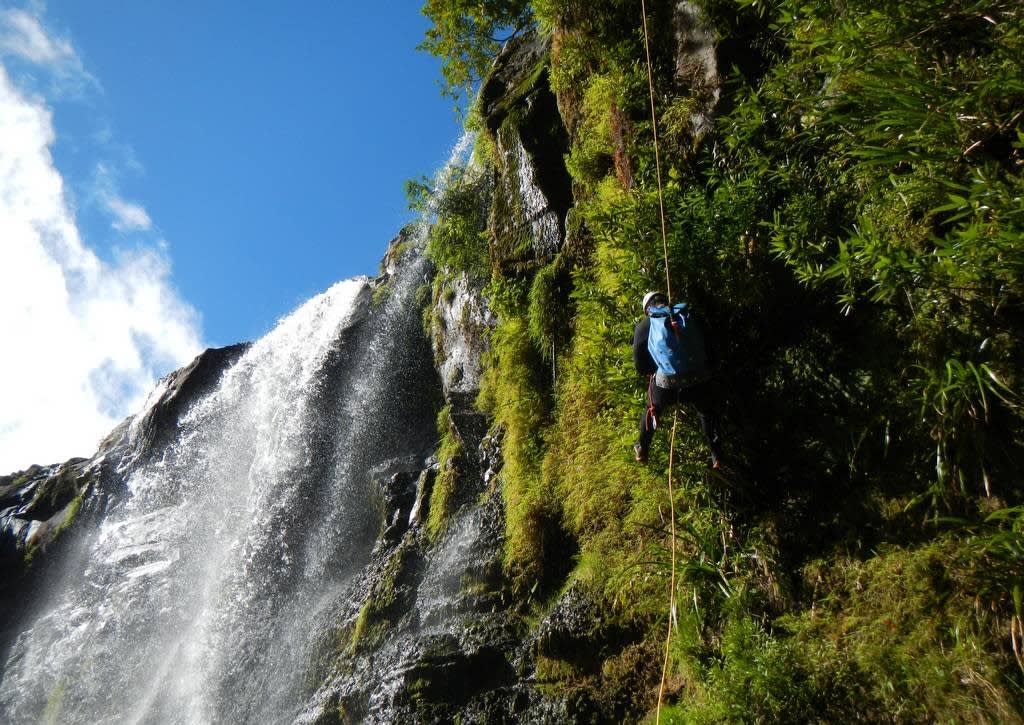
The craziest things to do on Réunion Island
Rightly nicknamed the "Intense Island", Réunion offers a whole host of crazy activities to keep you on your toes!
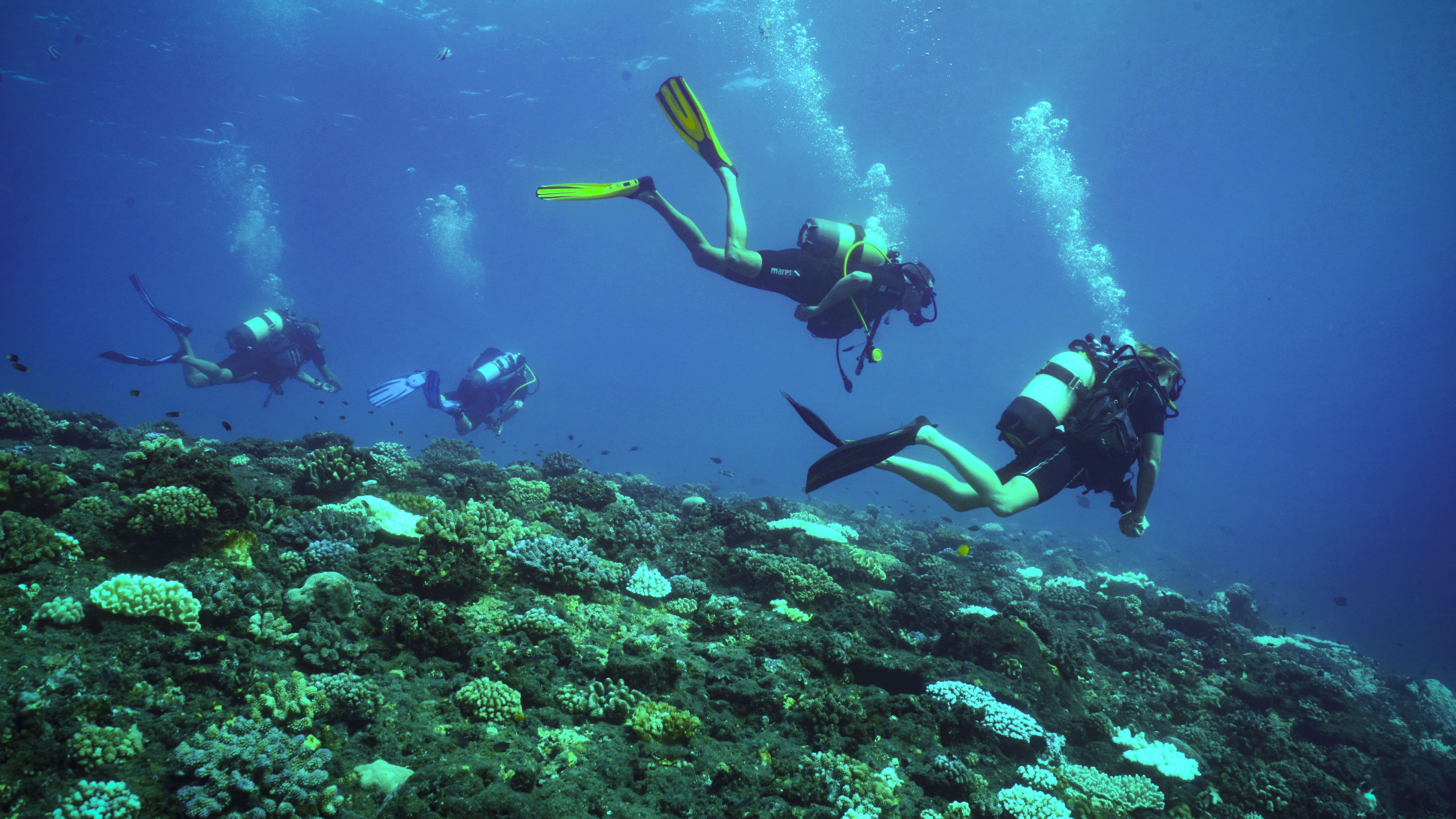
Reunion Island is a hidden gem for divers, where you can explore everything from volcanic "lava tubes" to vibrant coral reefs teeming with life. Whether you’re looking for the famous drop-offs of Saint-Leu or the quiet lagoons of the south, in this article you will find the best spots to dive into the Indian Ocean.
Welcome to Manawa, the website for booking outdoor activities around the world. From diving to canyoning, we connect adventure enthusiasts with professional local instructors to guarantee unforgettable experiences.
Reunion Island is a rare place where volcanic drama meets coral beauty. Most of the top-tier diving is concentrated along the west coast, where the island’s rugged terrain creates a sheltered playground filled with underwater caves, canyons, and ancient lava flows. It’s a place where you can explore a haunting shipwreck in the morning and drift over a vibrant coral garden in the afternoon.
One of the biggest draws here is the incredible visibility, which regularly reaches 30 m (100 ft). The water is warm, ranging from 22°C (72°F) in the cooler months to 29°C (84°F) in the peak of summer. While you can technically dive here year-round, the sweet spot is between June and November. This period offers the best conditions and, if you're lucky, the chance to hear the haunting songs of humpback whales passing through the deep blue.
Ready to explore the depths? Below, you’ll find a list of the best places to go scuba diving around the island.
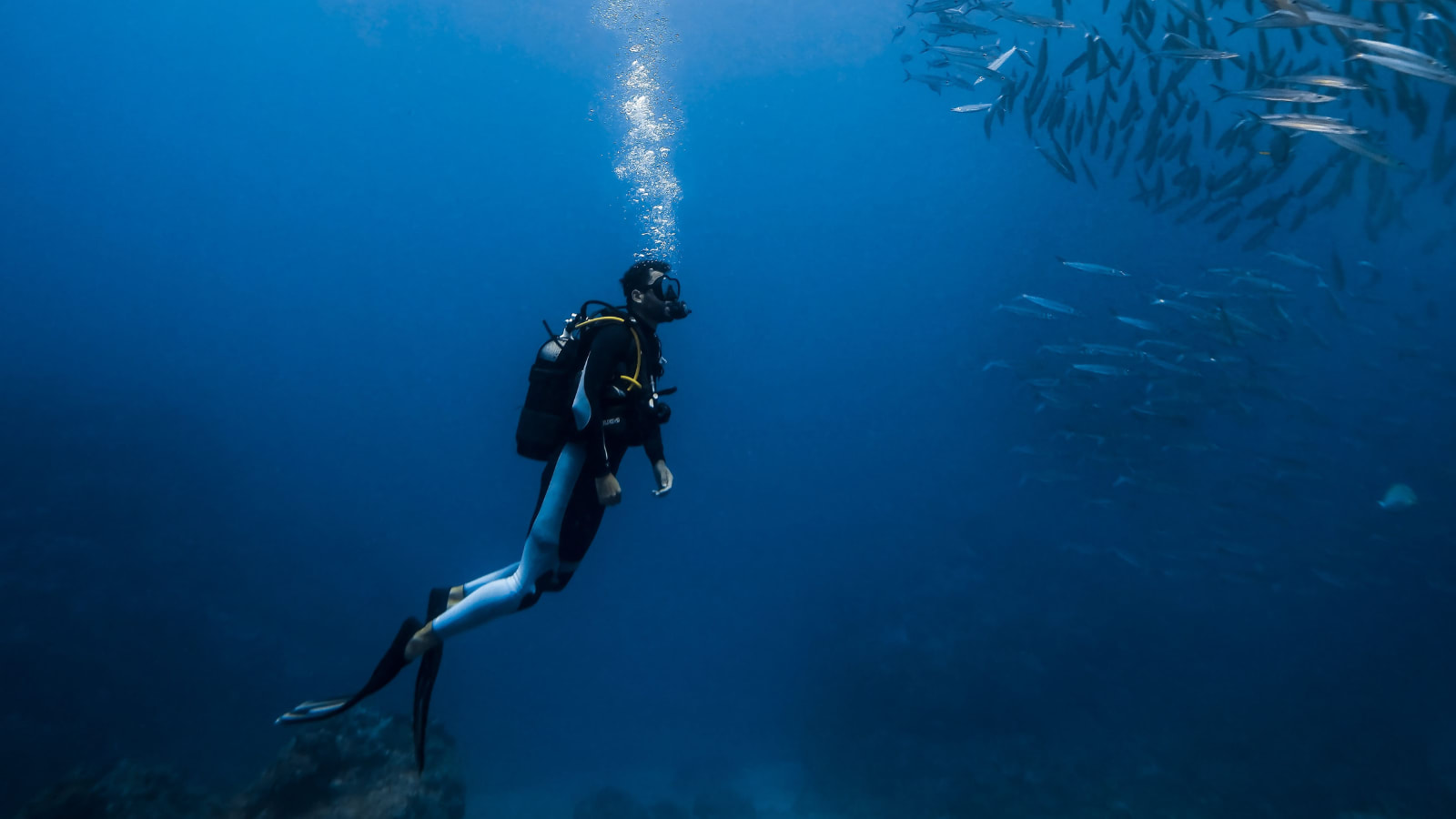
If you’re an experienced diver looking for a thrill, the area around Le Port is where things get interesting. The highlight here is undoubtedly Le Grand Tombant de La Possession, a massive tiered wall that drops from 40 meters to depths of 70 meters. Because of the technical nature of the site and the potential for strong currents, this spot is reserved for advanced divers.
The landscape is a striking reminder of the island’s fiery origins, featuring dramatic basalt crevices and stretches of atmospheric black volcanic sand. Out in the "big blue," you have a front-row seat to the open ocean's heavy hitters; it’s common to spot yellowfin tuna, bonitos, and large schools of jacks patrolling the drop-off. In the darker nooks of the wall, keep an eye out for massive groupers and moray eels hiding in the volcanic rock.
Diving in Saint-Paul offers the best of both worlds: easy-access reefs and legendary deep-sea wrecks. For beginners, Cap La Houssaye is the island’s go-to spot for a first "baptism" dive. With depths starting at just 4 meters, it’s home to a shallow cave at 6 meters that creates an unforgettable memory for new divers. Despite its accessibility, the area is packed with life, from sea turtles and lobsters to colorful mollusks hiding in the volcanic rock.
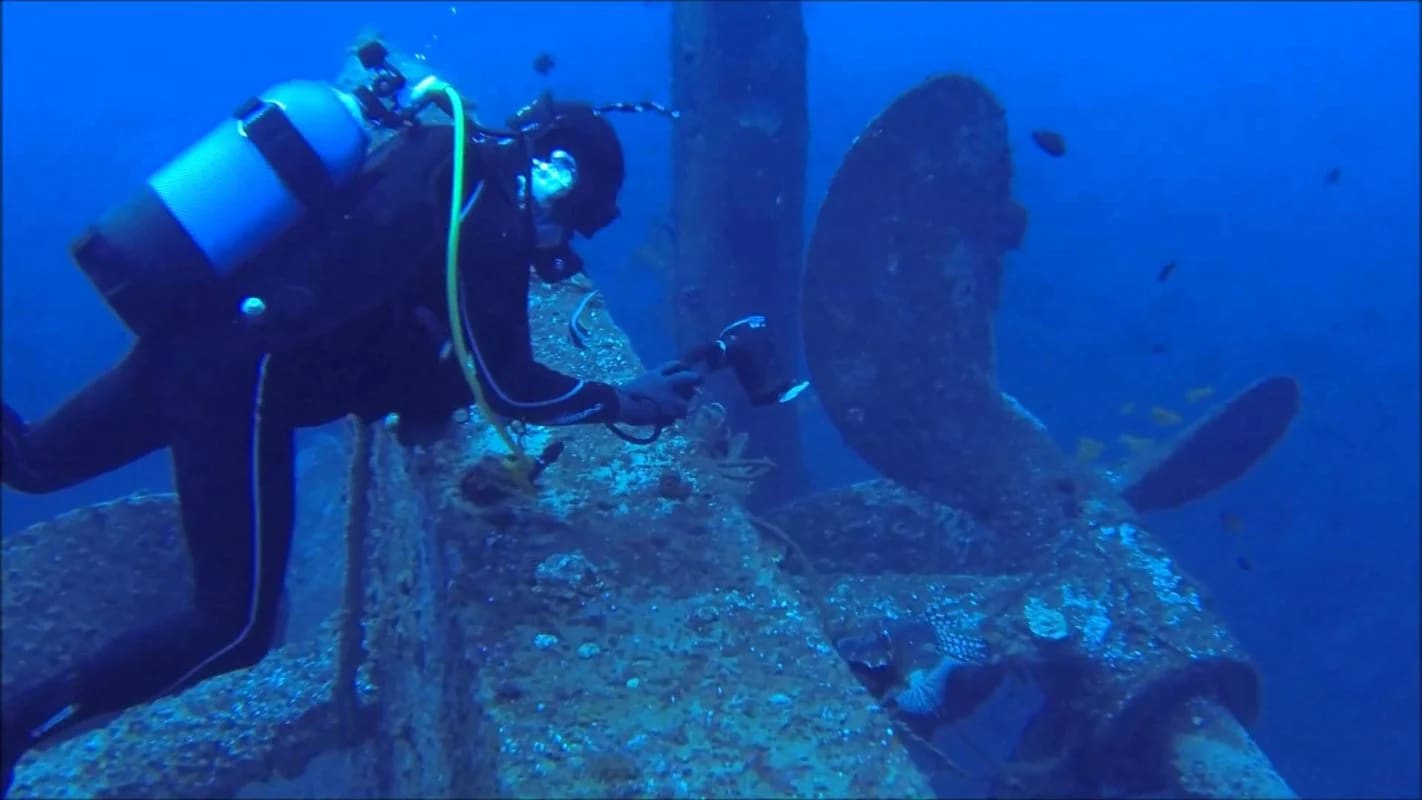
For the more experienced, the bay is a graveyard of fascinating steel. The Sea Venture wreck is a highlight for Level 2 divers, resting at 49 meters where its massive propellers are now swarmed by tuna, dorados, and the occasional shark. A smaller, 10-meter barge also sits at 25 meters on a bed of black sand, acting as a busy hub for countless tropical fish and torpedo rays.
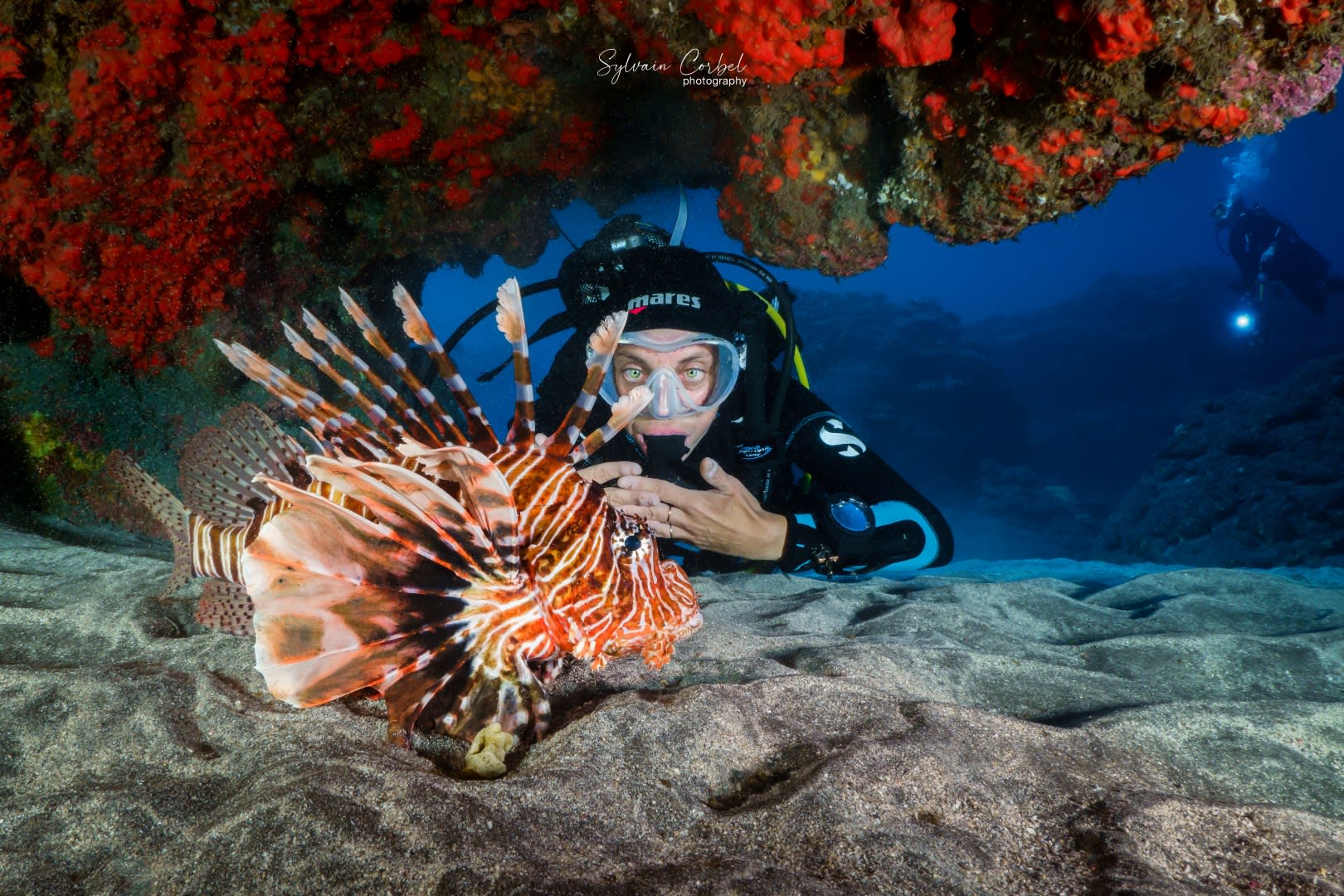
The marina at Saint-Gilles is the island’s primary hub for underwater exploration. Setting off for a scuba diving experience in Saint-Gilles-les-Bains gives you access to over 20 different sites, ranging from sunlit coral flats to technical deep-water wrecks. Whether you are gliding over the sandy bottoms of the lagoon or navigating the dramatic outer reef slopes, the sheer variety here is hard to beat.
For advanced divers, the wreck of the Hai Siang is the local legend. Intentionally sunk off Cape des Aigrettes in the 1980s, this 50-meter ship sits at a depth of 54 meters. It is a breathtaking but demanding site; between the depth and the strong currents, it is strictly for those with significant experience. Those who make the descent are rewarded with the sight of an imposing "metal mask" structure that has become a sanctuary for stingrays and massive schools of predatory fish.
If you prefer natural formations, the area is famous for its intricate networks of caves, faults, and tunnels. Sites like Pierre du Préfet are famous for their natural basalt arches, providing a perfect backdrop for spotting the local residents: turtles, rays, and curious octopuses.
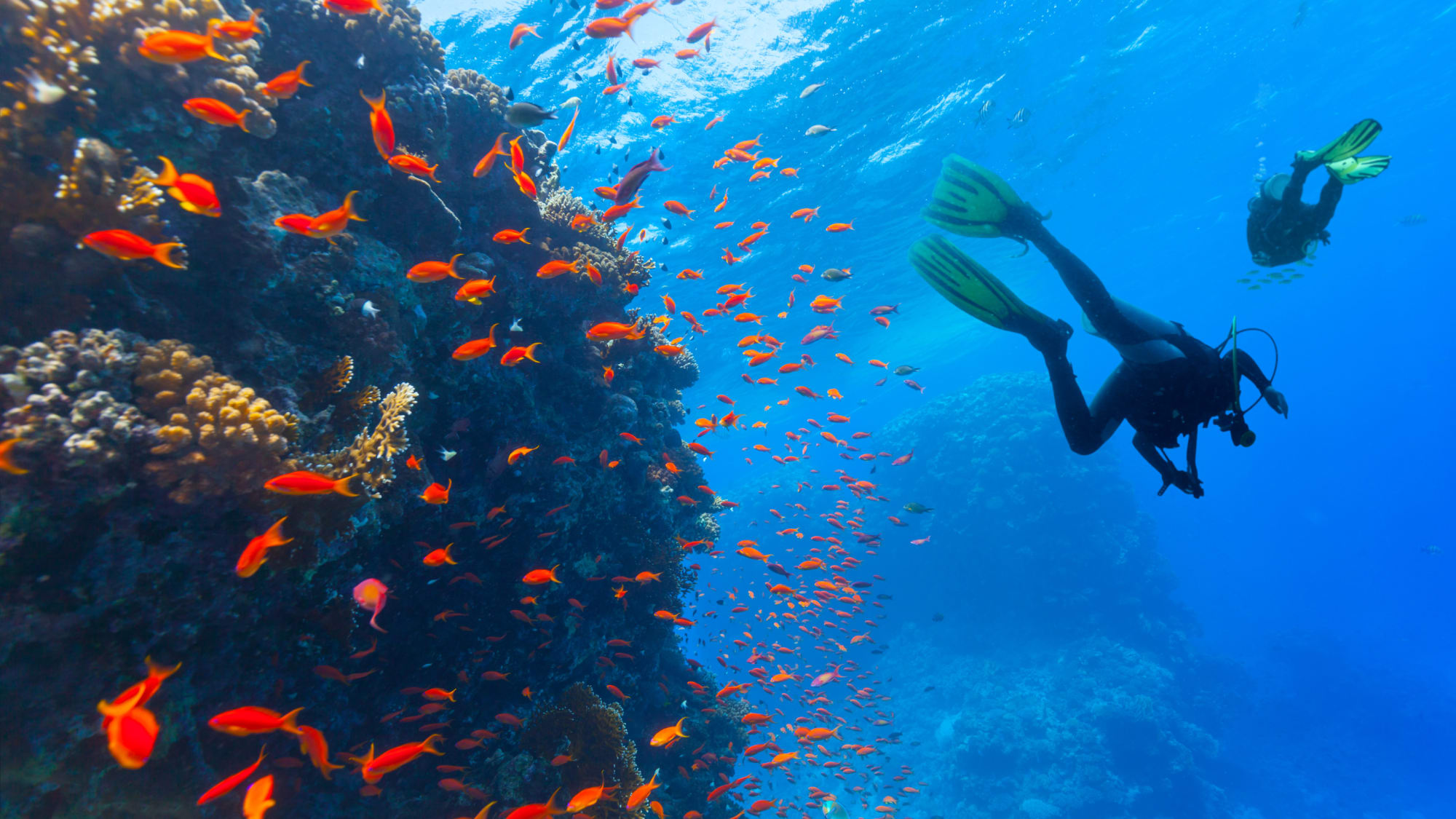
Diving in Saint-Leu puts you right in the center of the Natural Marine Reserve of Reunion Island, where all the top sites are within a 30-minute boat ride. This area is famous for its incredible variety, offering everything from shallow coral gardens to vertical 80-meter drop-offs. Depending on the season, you’ll see typical reef fish and turtles, but also larger visitors like dolphins, eagle rays, and even humpback whales.
For Level 1 divers, Passe de l'Ermitage and the turtle-heavy 3 Bassins are essential stops. You can also explore the swim-throughs at Les 2 Arches or the volcanic crevices of Jardin des Kiosques. If you're looking for a bit more drama, Boxy's Canyon offers a wall that starts at 6 meters before plunging into a deep 60-meter abyss.
Advanced (Level 2) divers can tackle Pointe au Sel, widely considered the best deep dive on the island. It’s a breathtaking wall dropping to 71 meters, where you’ll spot pelagics like tuna and barracuda in the blue. Other high-level highlights include the Antonio Lorenzo wreck and the Arche de Noël, a massive underwater arch surrounded by jagged volcanic peaks.
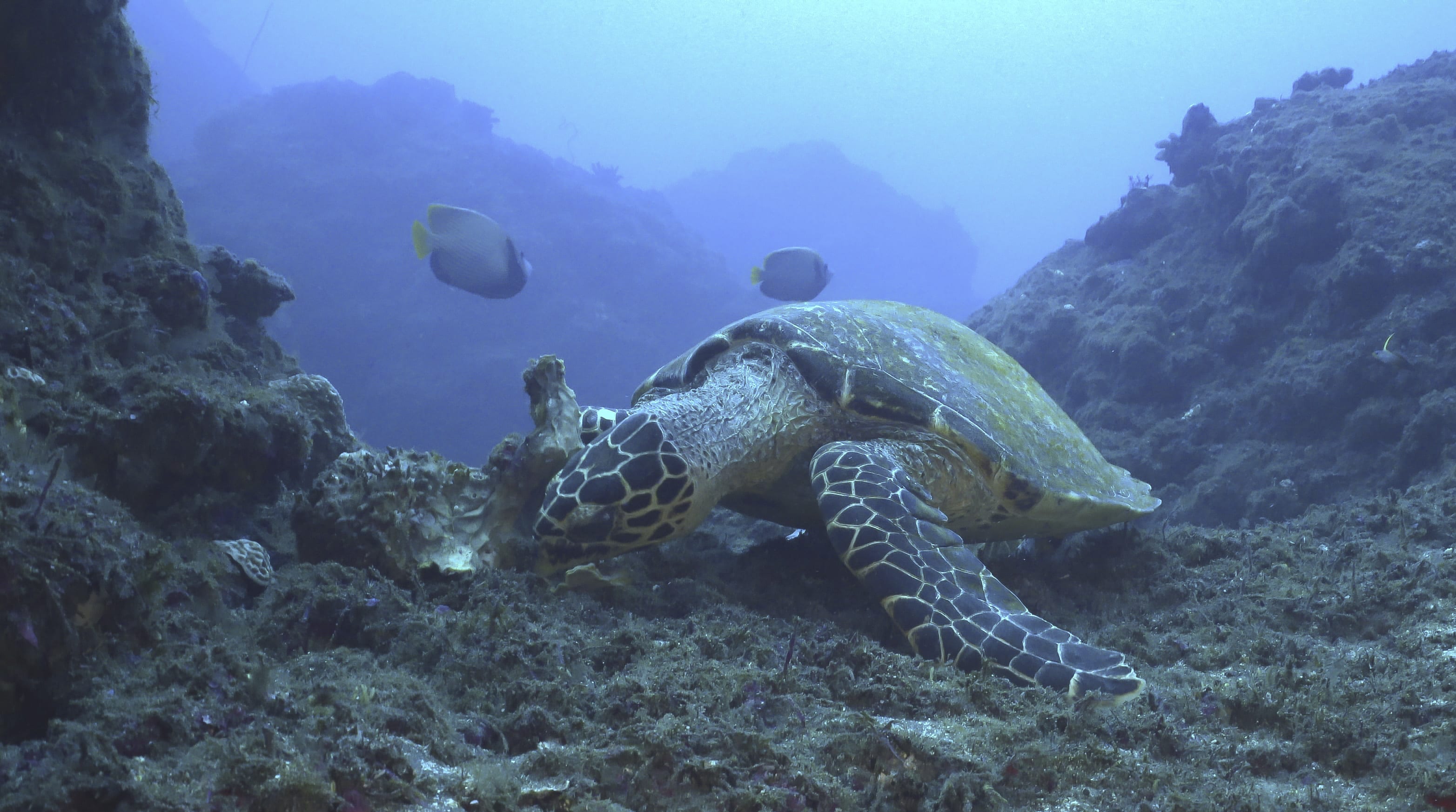
If you are looking to escape the crowds, scuba diving in L'Étang-Salé offers some of the most remarkable and least-visited underwater sites on the island. Located on the southwest coast, this peaceful spot feels like a well-kept secret. The landscape here is purely volcanic; you’ll explore submerged lava flows from the Piton des Neiges that have created a dramatic playground of basalt tunnels, arches, and deep canyons.
Despite its rugged geology, it is an ideal place for beginners. The calm, shallow waters at the edge of the marine reserve provide a safe environment for those looking for the unique sensation of breathing underwater at their own pace. As you glide over the striking black sand, you’ll encounter vibrant reef life, from curious sea turtles and eagle rays to a kaleidoscopic array of tropical fish. For experienced divers, sites like The Poseidon Steps (a natural basalt staircase) and the Grottes du Portail offer a deeper look into the island's fiery origins.
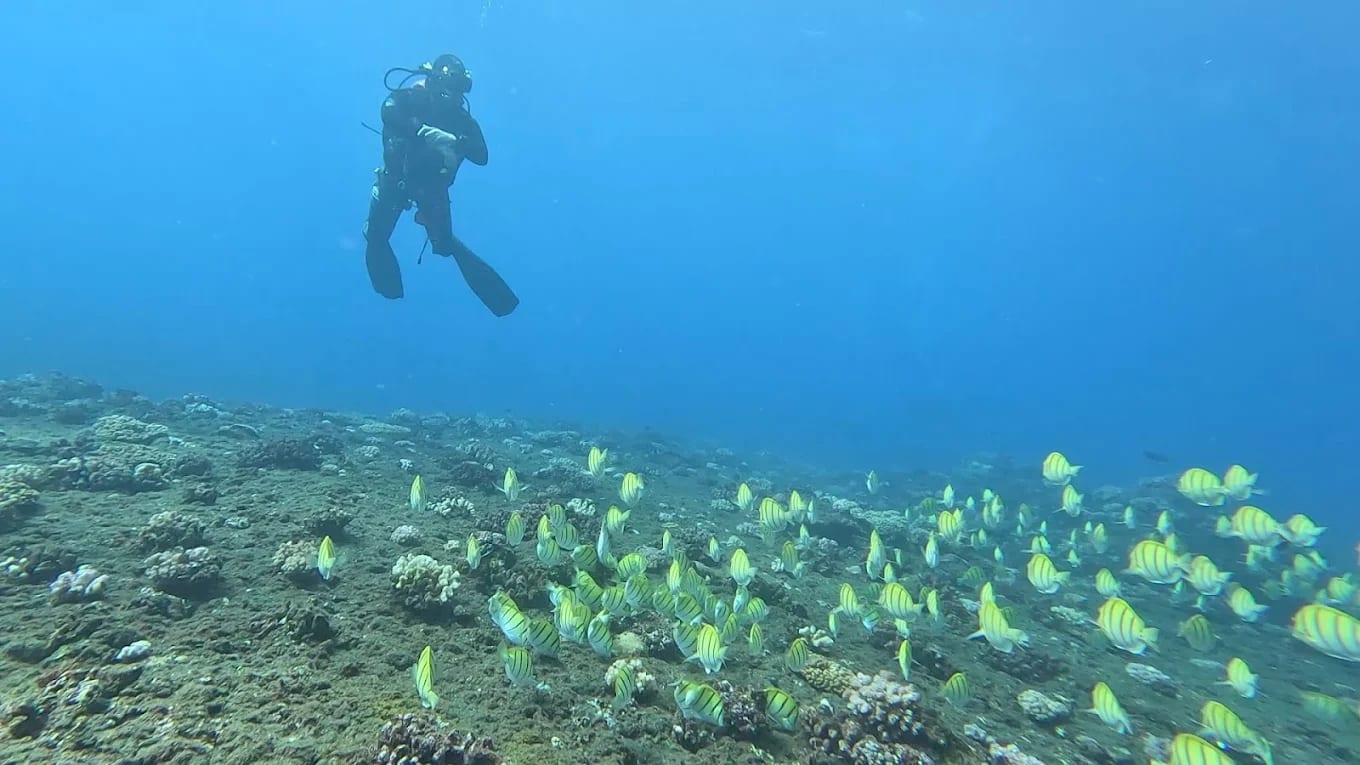
If you travel to the southern part of the island, you’ll find the charming town of Saint-Pierre, home to one of the island’s most tranquil lagoons. This is an excellent place for beginner divers or those simply seeking a relaxed, shallow dive away from the more crowded western spots.
The underwater landscape here is a lush garden of branching coral formations and sandy patches, which act as a magnet for a huge variety of reef fish and invertebrates. Because the lagoon is so protected, visibility is generally excellent. The calm conditions make it ideal for long, slow dives where you can take your time observing the smaller details of the reef—keep an eye out for colourful nudibranchs and juvenile fish hiding among the coral.
With these 7 spots in your logbook, you’re all set to experience the best of scuba diving in Reunion Island. Whether you’re chasing the thrill of a deep volcanic drop-off or just want to glide over a sun-drenched reef, the island’s underwater world is waiting for you.
To make sure you're fully prepared before you hit the water, feel free to read a Complete Guide to Scuba Diving article. Of course, the adventure doesn't stop at the shoreline—Reunion Island is an outdoor playground offering everything from canyoning and hiking to sea kayaking and whale watching. If you’re hunting for even more adrenaline, check out the article on The craziest things to do on Réunion Island to take your trip to the next level!
I’ve always loved traveling on my own and chasing new experiences, especially outdoors. I tend to plan my trips carefully, and I enjoy sharing what I discover — tips, places, and little lessons — in the hope that it can inspire others or help them make the most of their own adventures.
Rightly nicknamed the "Intense Island", Réunion offers a whole host of crazy activities to keep you on your toes!
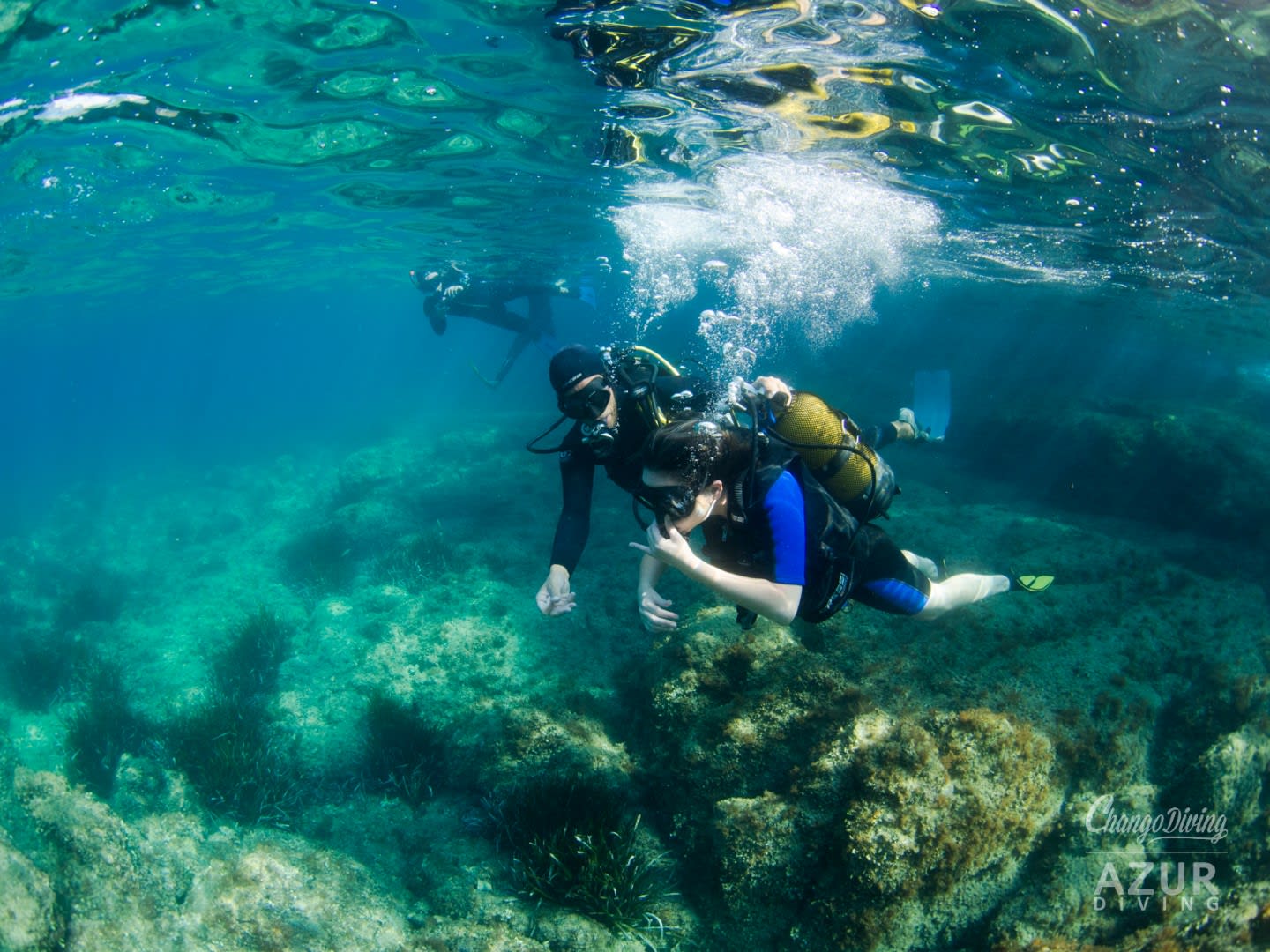
Learn all you need to know before your first scuba dive: Who can dive and who can't? What are the best places?
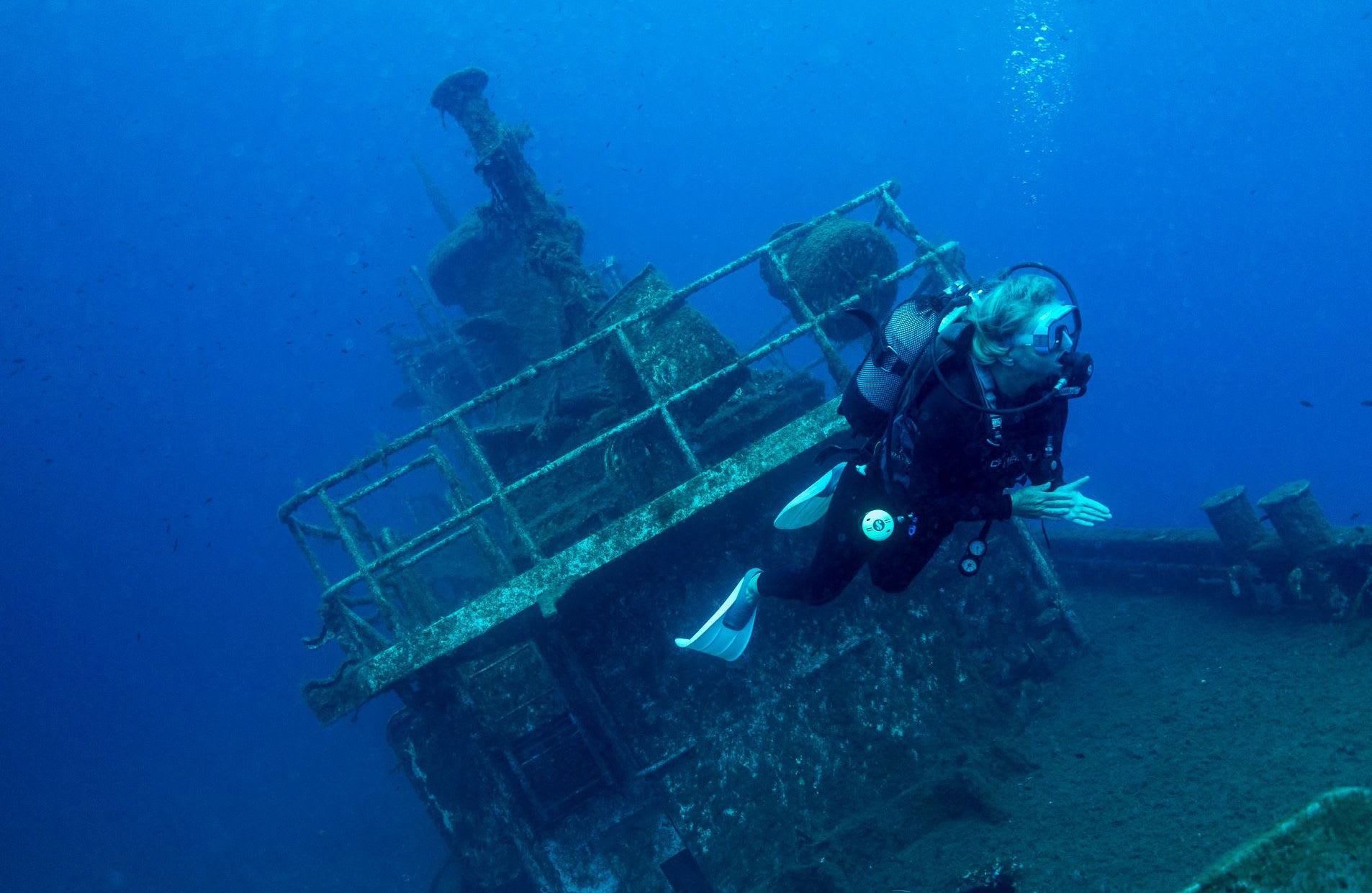
Discover the best scuba diving YouTube blogs, podcasts, and influencers to follow for expert advice and underwater inspiration. This guide connects you with the top creators in the
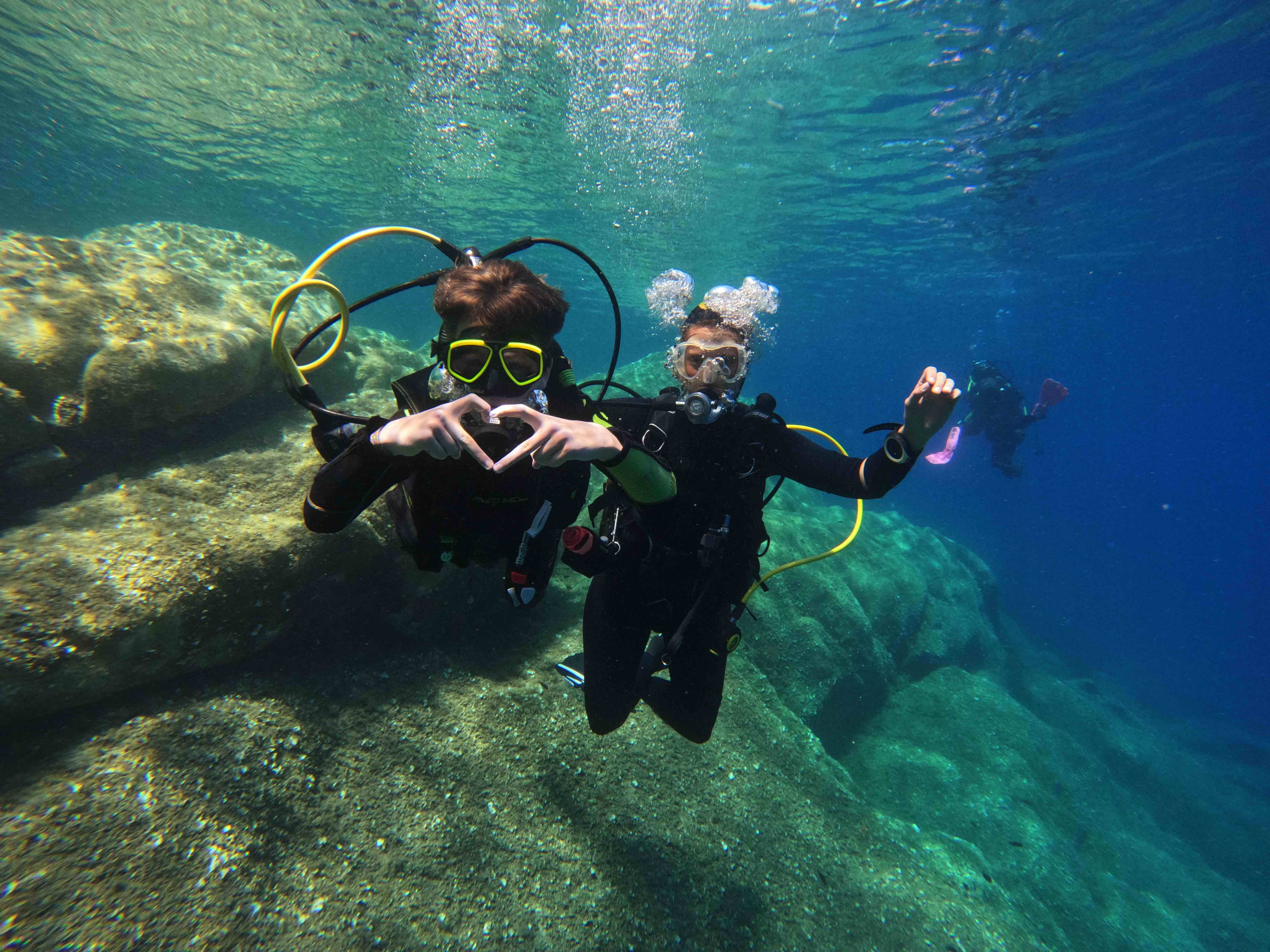
Check out the best scuba diving spots in Corsica, from easy bays to deeper sites — clear water, sea life, rocks, and old World War II wrecks underwater.
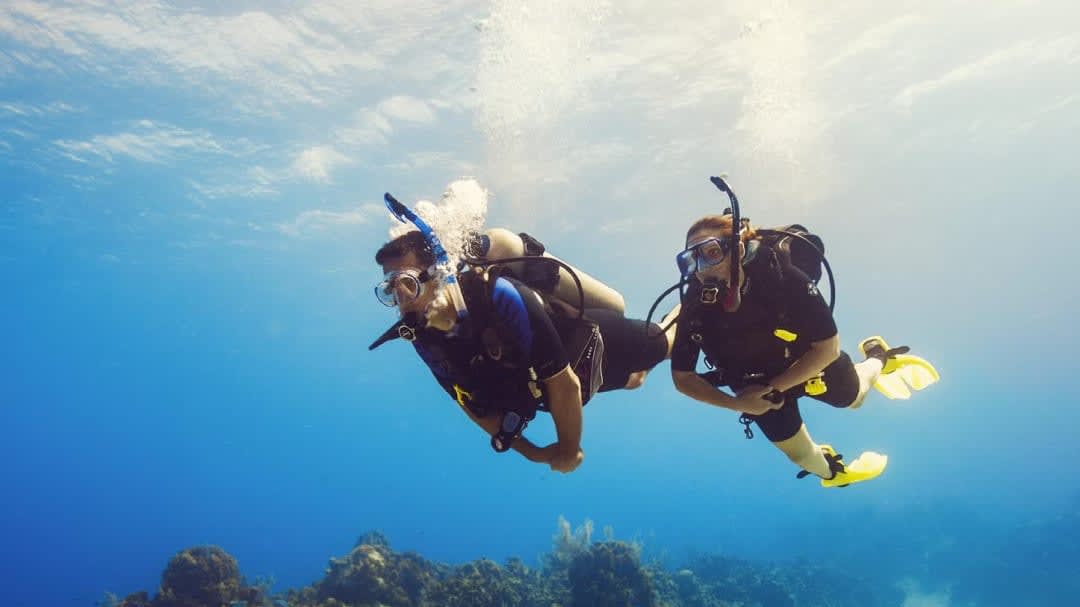
Discover the best scuba diving in Madeira, from vibrant reefs in Funchal and Machico to historic wrecks in Porto Santo. Year-round underwater adventures await.
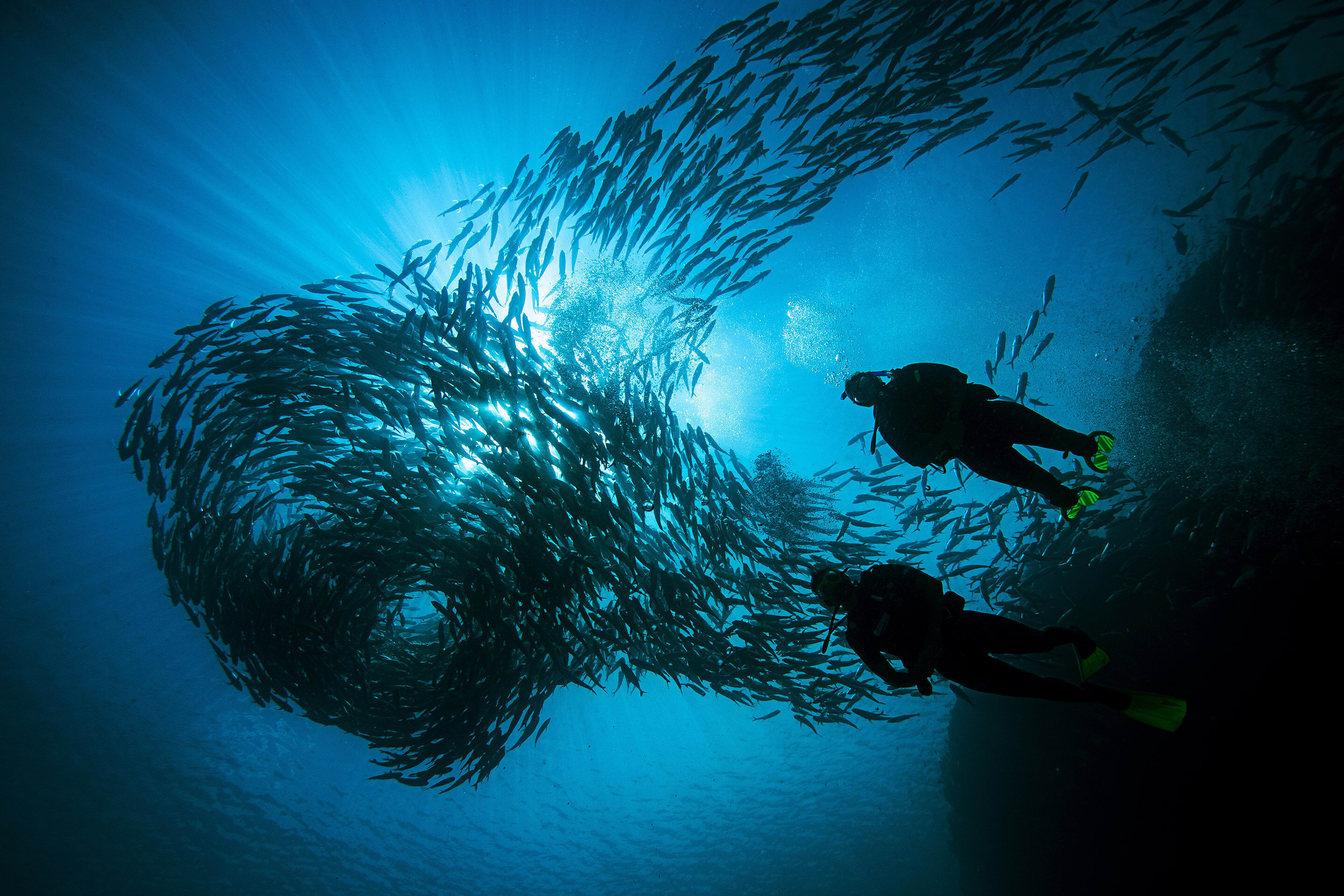
Discover how scuba diving became the exciting leisure activity it is today with this brief history of diving!