Coasteering
Recommended
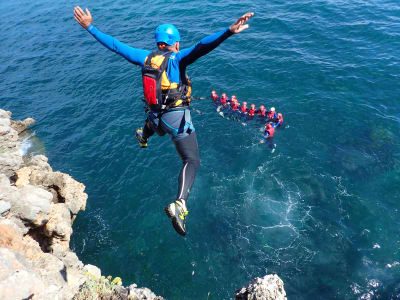
Coasteering and Speedboat at Arrábida from Creiro Beach, near Lisbon
(46)
Organized by Wind
Parque Natural da Arrábida, Portugal
4 hrs
From€50€40
-20%
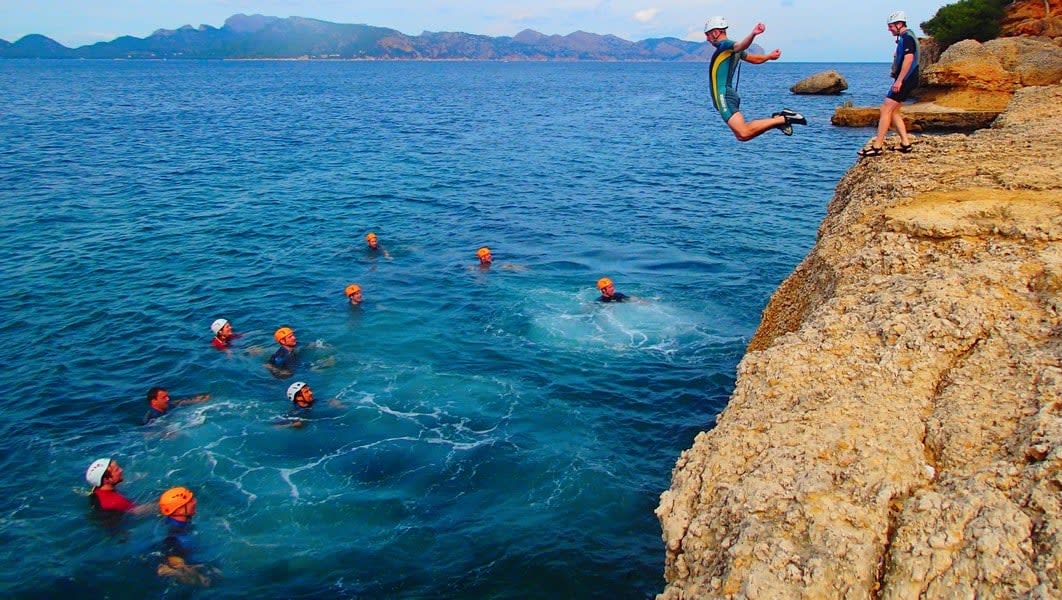
Coasteering is one of the most exciting ways to explore the coastline, combining cliff jumping, swimming, climbing, and sea cave exploration in one unforgettable adventure. This complete guide to coasteering covers everything you need to know before trying this thrilling coastal activity.
Welcome to Manawa, the website for booking outdoor activities around the world. From diving to canyoning, we connect adventure enthusiasts with professional local instructors to guarantee unforgettable experiences.
For thrill-seekers and nature lovers, few activities match the excitement of coasteering. By climbing over rocks, swimming through clear waters, and jumping from cliffs into the sea, participants get to experience the coastline from a completely different perspective. It’s an activity that blends outdoor adventure with discovering hidden parts of the coast that are often inaccessible by land. In this complete guide to coasteering, you’ll learn how the activity works, the history, important safety tips, and the best places to try it. You can also explore our article on the Top 10 Coasteering Spots in Europe for inspiration on where to start your adventure.
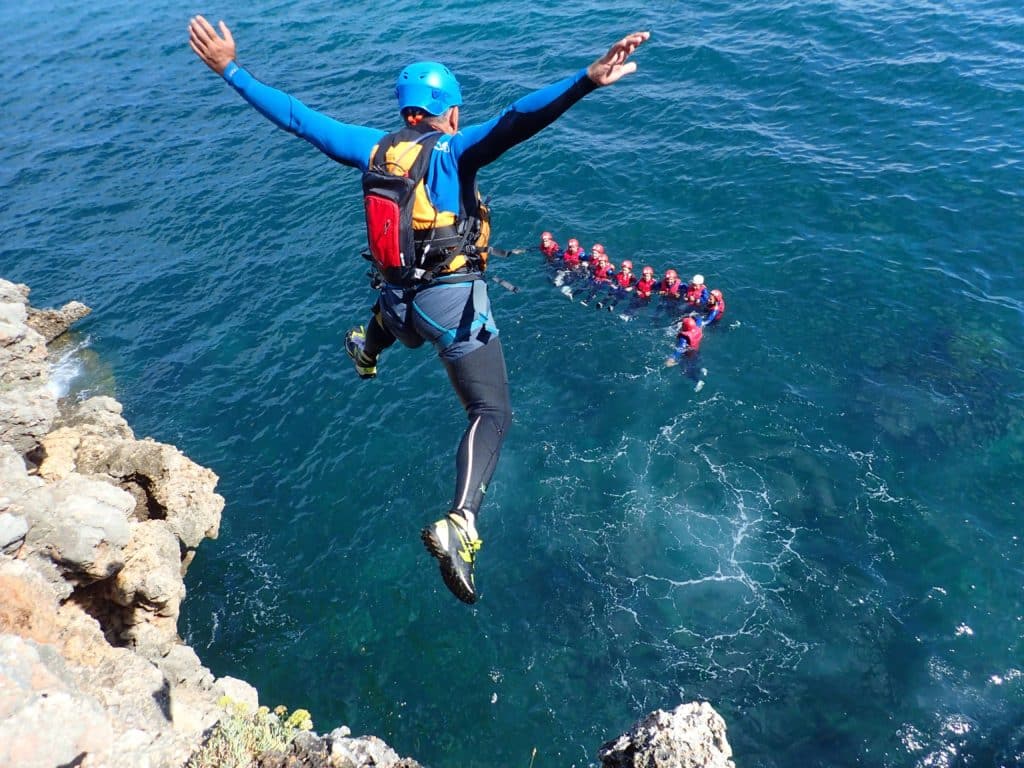
Coasteering is an action-packed coastal adventure that combines swimming, climbing, cliff jumping, and exploring hidden sea caves along rugged shorelines. The exact experience depends on the coastline, your tour, and the instructor, but most adventures include a mix of activities such as swimming between rocky outcrops, climbing over cliffs, abseiling (rappelling), sliding along rocks, and exploring grottos, tide pools, and secret caves.
Some tours may even include canyoning or encounters with local wildlife like seals, adding an extra thrill to the journey. No matter the order of activities, coasteering provides an unforgettable adventure, a full-body workout, and incredible photo opportunities to capture your coastal exploration
Thirty years ago, Welsh adventure-pioneers, and owners of the adventure company called TYF, came up with a great idea. The founders, Andy and Sarah Middleton were 4th generation adventurers and descendants of cavers in Yorkshire in the 1930s.
These adrenaline junkies loved outdoor sports of all kinds. They wanted to try canyoning but lived too far from any canyons. Their longing for something akin gave birth to a new sport ''coasteering''. With plenty of coastal areas nearby in Wales, it was the perfect place to start.
Also known as coastal canyoning, this relatively young sport has now spread past the borders of Wales, into England and to many other European countries as well. Something this special and fun couldn’t be kept secret for long! Coasteering is also very popular in regions where rivers and canyons get wet in the dry season, and where canyoning is not an option in Summer months, Palma de Mallorca and Greece, for example.
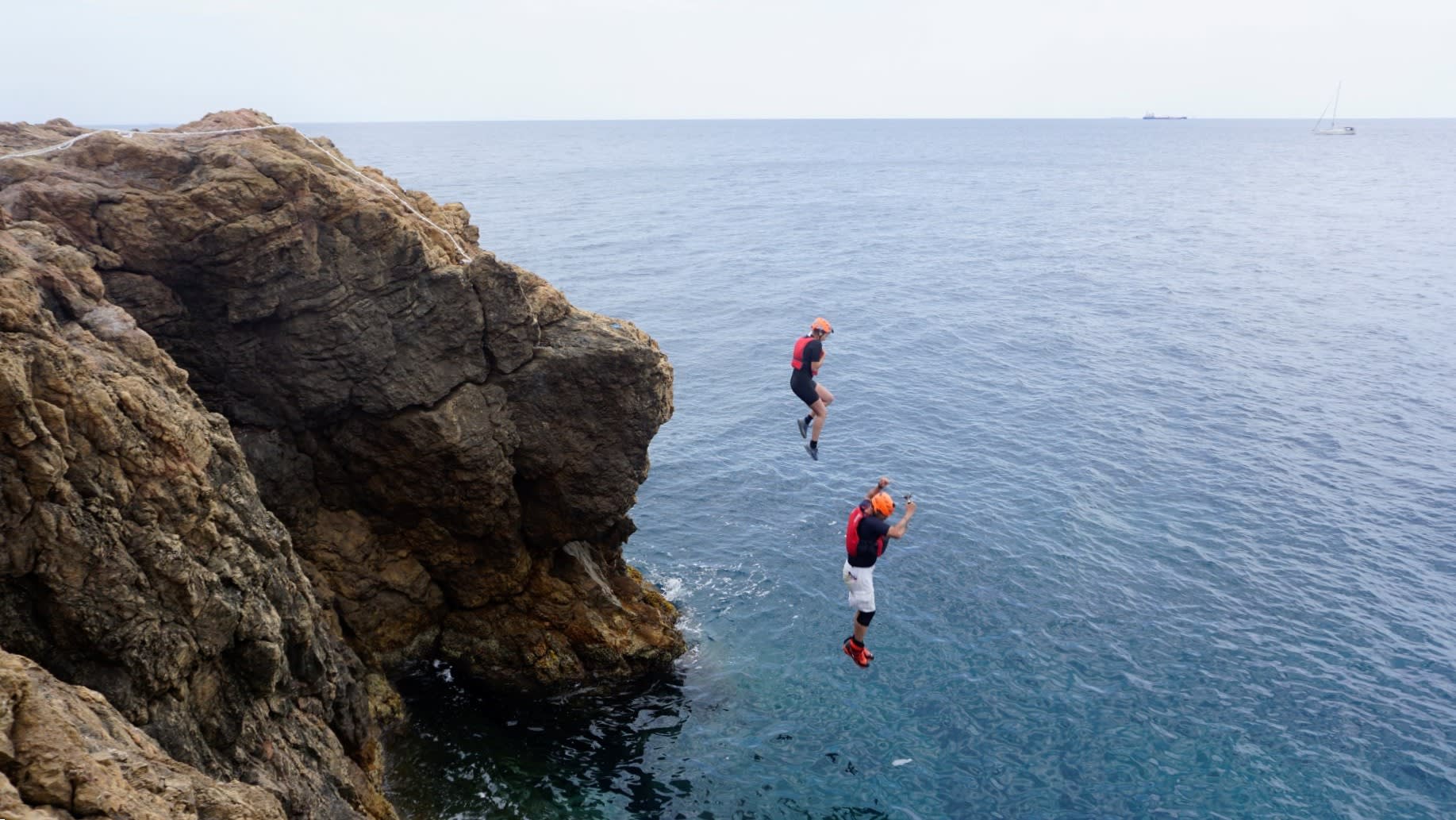
When you book a guided coasteering activity, your guide will have almost all of the gear needed. For instance, they will provide helmets, neoprene wetsuits (for sites with colder waters) and life vests. You will need to bring your own swimwear, waterproof footwear, towel and camera if desired. For locations with warmer waters and weather, it is advised to bring water, sunglasses and sunscreen as well.
Depending on the type of tour, the instructors may also give you a harness for rock climbing, abseiling (rappelling down rock-faces) and possibly zip-lining. Not all activities at your destination will include zip-lining or abseiling. Coasteering is designed specially to navigate each unique coastline’s features. For example, if you are visiting the Spanish Balearic Island of Palma de Mallorca, there will be a zip-lining portion of the tour.
Anyone can do this activity, with a few minor exceptions. Minimum ages for children vary based on location. Usually, children aged 8 and up are approved to join the fun. But in some locations in England for instance, the minimum age is 12. Several companies may offer introductory course options for younger children as well. Make sure to check the activity description for specific age requirements.
There are a few other exceptions to consider before coasteering. Firstly, It is recommended that participants feel comfortable swimming in general. Experience swimming in waves is a plus as well, but not necessary. Secondly, confidence walking on uneven terrain and climbing around rocky areas should be fairly comfortable for you as well.
Guided tours are led by professionals who are oftentimes also expert climbers, kayakers, lifeguards, and canyoners. These guides know how water moves and behaves. They also know the more difficult areas that require a bit more strength, or technical maneuvering. Because of this, you won’t need to have advanced knowledge. Your guide will show you everything you need to do! They are skilled at adapting each section of the activity for each skill level.
There are also alternative routes available along the way if one section seems too scary or advanced. For example, a jump of 10 metres high, or abseiling, will be better suited for slightly older or more athletic participants.
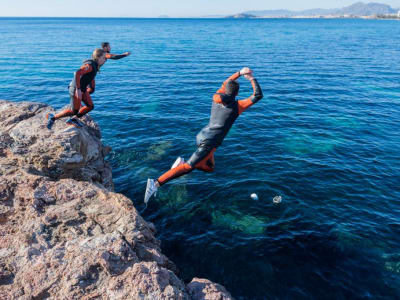
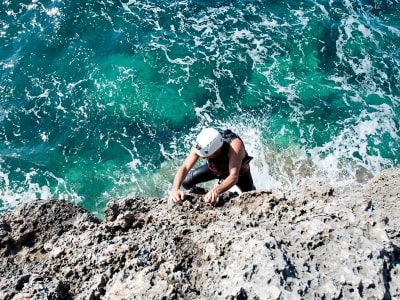
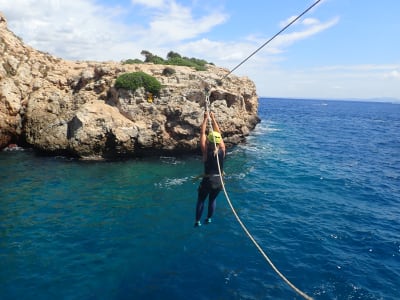
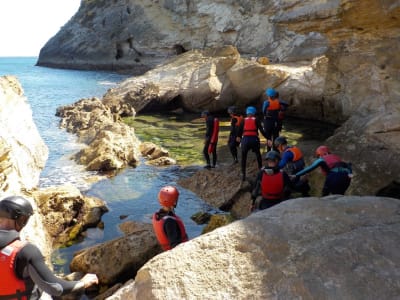
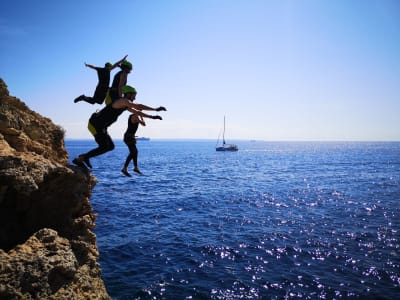
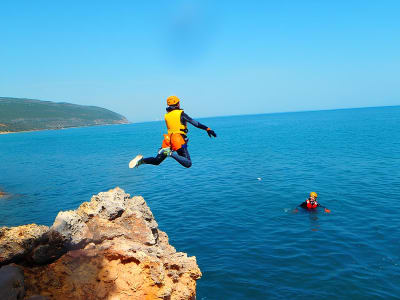
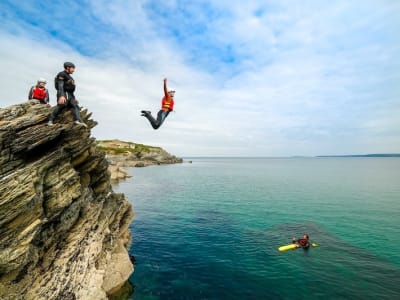
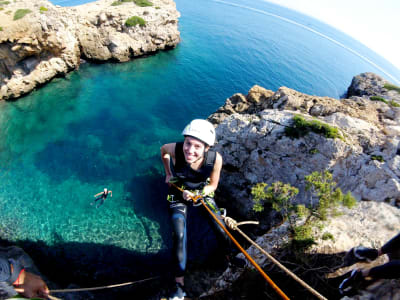
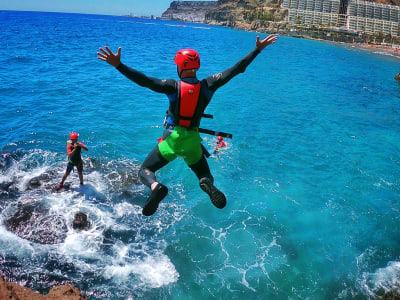
Put simply, you will have FUN! Once you arrive at the tour guide/ instructor centre, you will fill out forms and waivers, and confirm whether you can indeed swim, the ages of your group members, and so forth.
Next, the staff will begin to get everyone fitted in their gear. Helmets need to be sized correctly, wetsuits need to be the right size as well. The instructors will then fit you in harnesses if applicable.
After everyone is suited up, the instructor will give an introductory brief regarding safety precautions, and what to expect during the activity. The average time for one coasteering session is about 3 hours and around 800 metres in length. From there, the group will depart for the coast. Usually, the centre is only a 5-10 minute walk from the coast, so you won’t tire yourself out trying to get to the starting point!
A coasteering adventure is an inexpensive, accessible, family-friendly and safe activity. Those that have already tried coasteering say they are big fans. Oftentimes, after completing their first trek, participants want to immediately go again!
People love coasteering because it combines various adventure sports all in one. Climbing, swimming, and abseiling on their own are very fun, physical activities. Therefore, when you combine all of these things people already like to do even individually, the enjoyment increases exponentially!
Another unique thing about coasteering is the access to sections of coastlines that would not be visible otherwise. You would never see caves under the cliffs by just standing above the coast looking down into the water. Coasteering is entirely immersive, you will essentially be one with the water and flow where it flows. You will discover special grottos, narrow coastal canyons and tidepools.
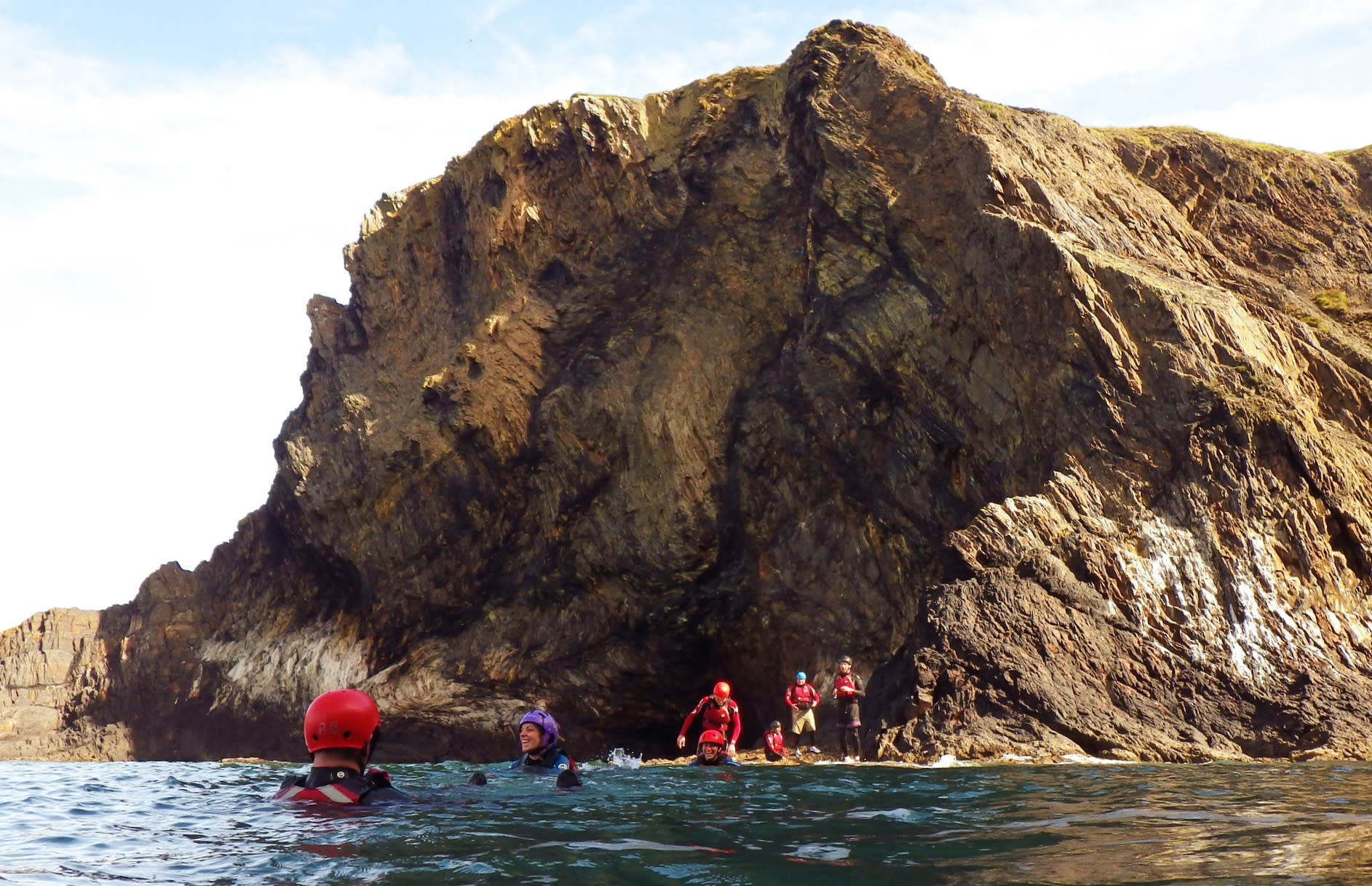
If you are lucky enough to live near the coast or have travelled somewhere along the sea, you know how breathtaking it can be when the salty ocean waves meet the land. While all coastlines are stunning, some are not ideal for coasteering. For instance, it’s not recommended you try coasteering on the Cliffs of Moher in Ireland. Those may be better enjoyed a few feet back from the edge unless you really enjoy hospital stays!
Other coasts, such as some in the South of France, are not ideal either. While they don’t tower 214 metres (or 702 ft) above the ocean the way the Cliffs of Moher do, the rocky coast is not solid enough. Climbing, descending, and even standing on these cliffs can cause them to crumble.
Also important are the waters below. Deep, calm waters are ideal and safe. They make for stress-free jumps and enjoyable swimming. In addition to the crumbly cliffs, the waves in southern France are often much rougher and generally not as much fun to go coasteering in. Luckily, there are many places that are lovely to go coasteering. The birthplace of Coasteering, for instance, Pembrokeshire.
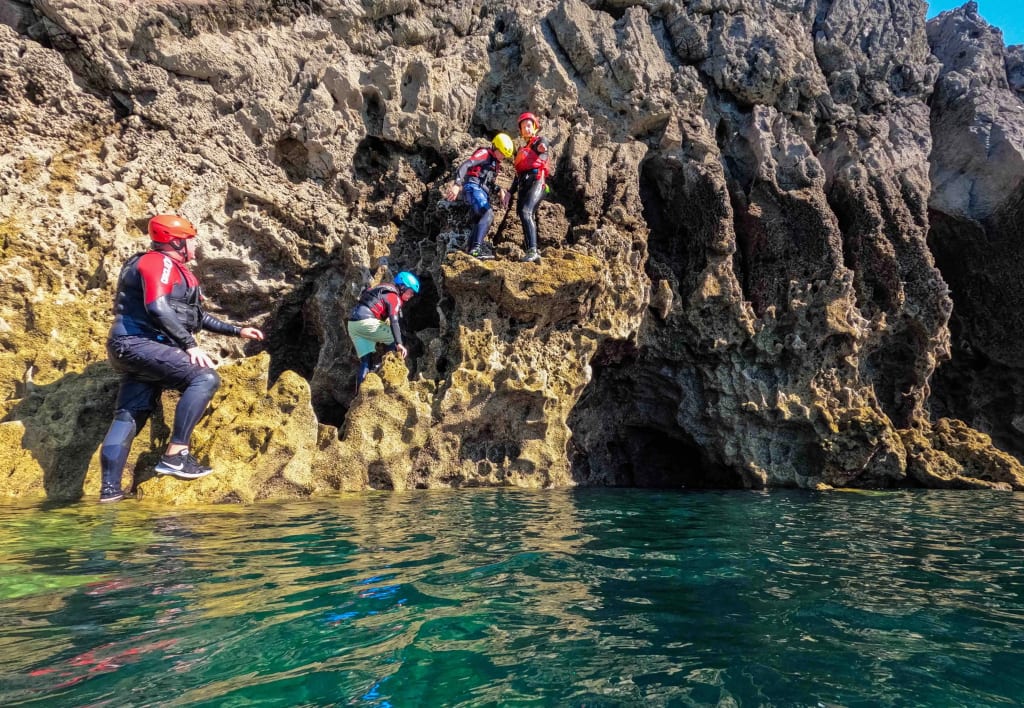
As the birthplace of this sport, coasteering excursions in Pembrokeshire are simply amazing. Wales is known for some of the most enchanting coastlines in the world, so it’s no wonder adventurers wanted to find some way to explore it! For more epic spots in the UK for coasteering, check out this article on the Top 5 spots to go coasteering in the UK!
Coasteering in Alcudia offers stunning turquoise waters, hidden coves, and rocky cliffs to explore. Whether swimming, jumping, or climbing, this Mediterranean spot is ideal for beginners and families looking for an unforgettable adventure!
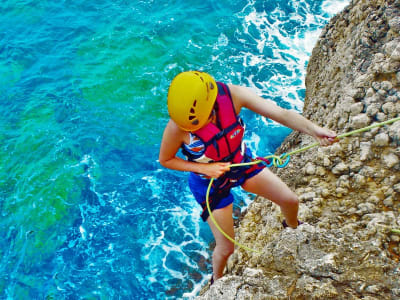
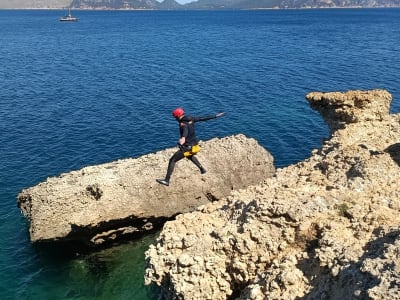
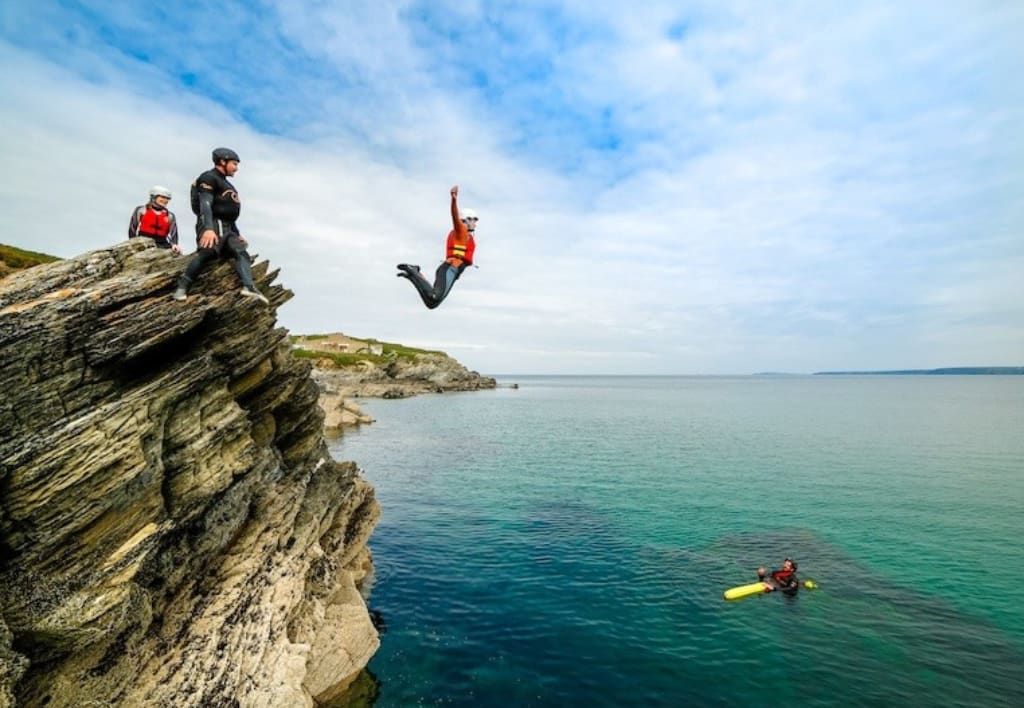
With rugged Atlantic cliffs and secret sea caves, Newquay offers endless thrills for water adventurers. Try coasteering in Newquay to navigate rocks, explore caves, and leap into the waves.
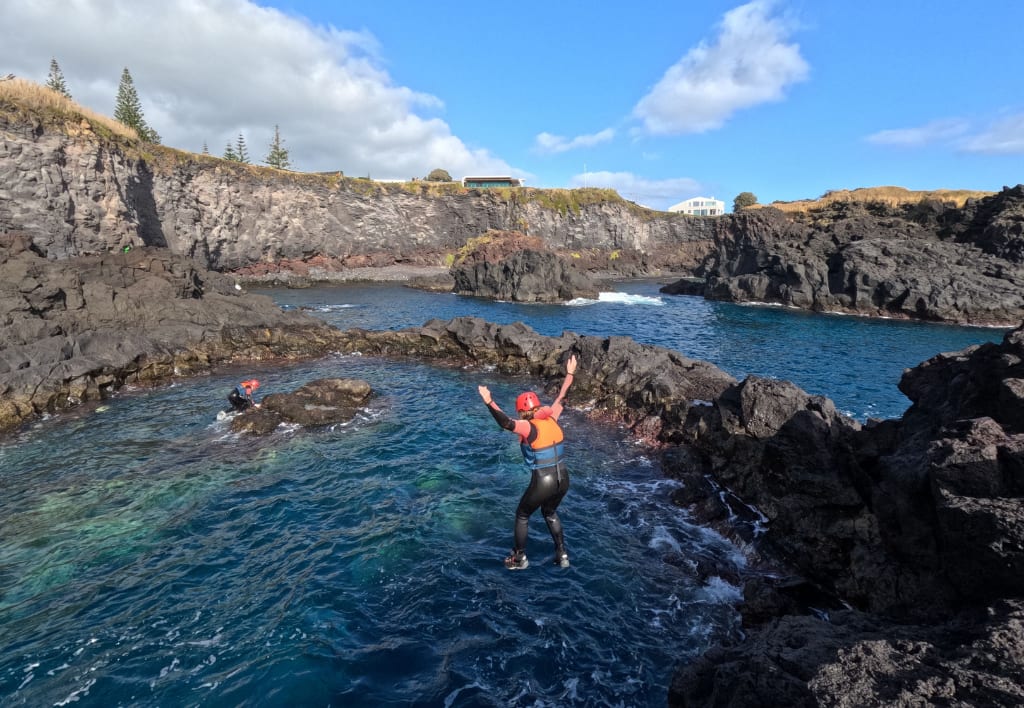
Volcanic cliffs and crystal-clear Atlantic waters create an unforgettable playground for thrill-seekers. Coasteering in São Miguel lets you jump from cliffs, swim through grottoes, and explore hidden coves.
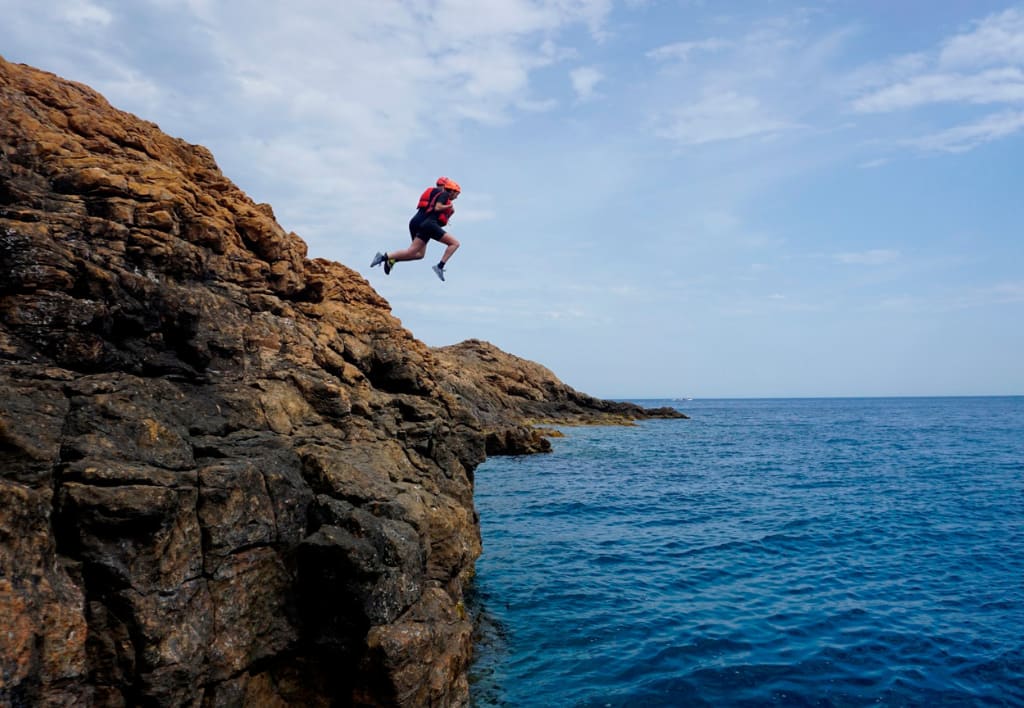
The coastlines of Greece are world-famous for their incredibly deep, beautiful blue waters, white sand beach and cliffs, and traditional Greek architecture. Plus, the climate is ideal for splashing around in the water and getting a tan! It’s certainly an unforgettable and ideal place to go coasteering in Greece.
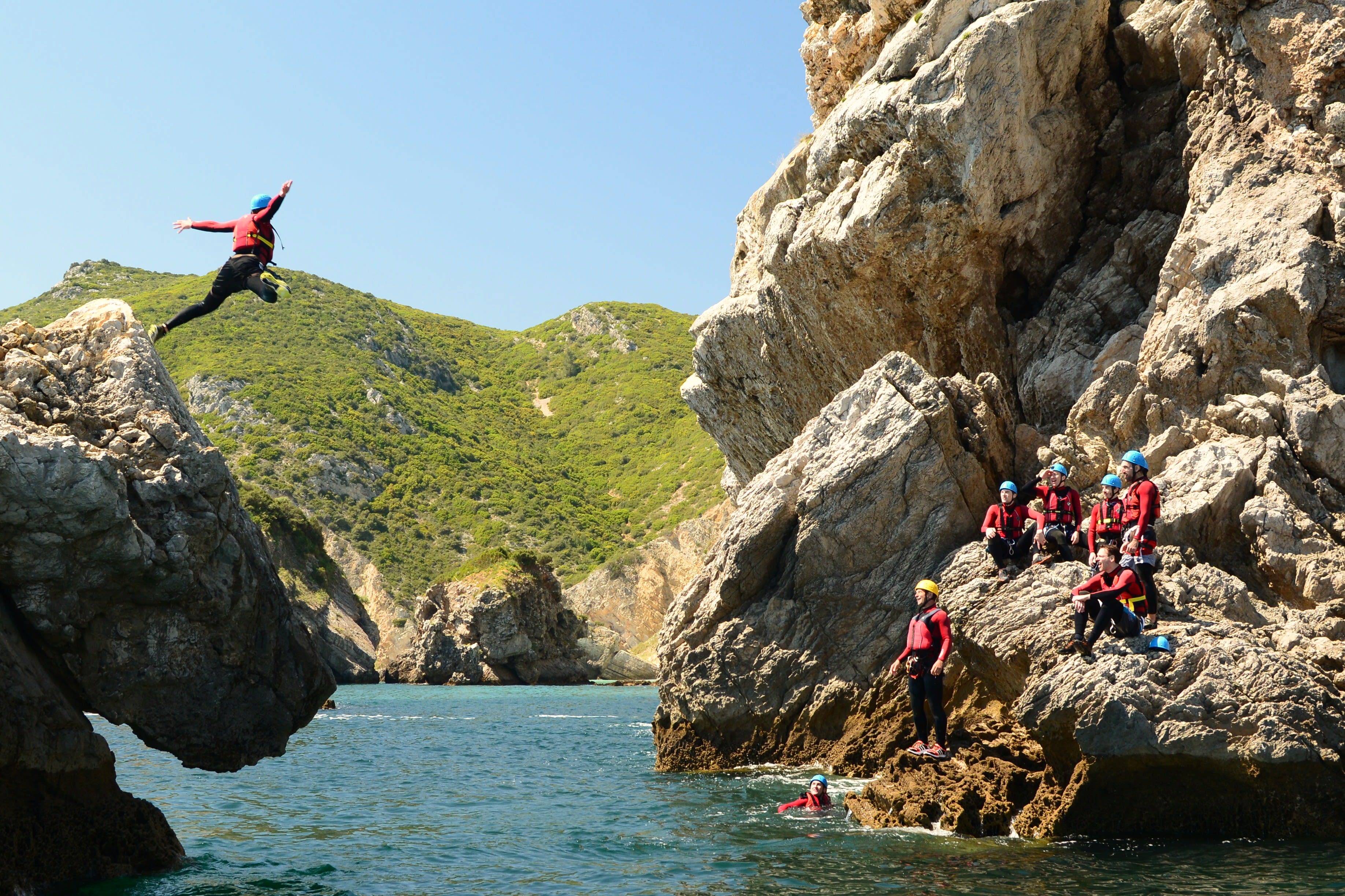
With its dramatic limestone cliffs, turquoise waters, and hidden sea caves, this coastal park is a true paradise for adventure seekers. Enjoy coasteering in Parque Natural da Arrábida, located near Lisbon, as you climb, swim, and jump along one of Portugal’s most stunning Mediterranean like coastlines.
Like any adventure sport, coasteering carries some risks, but it is generally considered safe when done with trained guides and proper equipment. Professional coasteering operators provide safety briefings, high-quality harnesses, helmets, wetsuits, and other essential gear to minimize risks.
The key to a safe coasteering experience is following your instructor’s guidance, being aware of your limits, and choosing a reputable tour company. Weather and tide conditions are also closely monitored, and tours are postponed or modified if conditions aren’t safe. With these precautions in place, coasteering is a thrilling yet safe way to explore the coastline, suitable for families, beginners, and experienced adventurers alike.
There you have it, the complete guide to coasteering. Hopefully, you are convinced of the amazing adventure coasteering can offer you. There are certainly more than just these three places to try it as well. Be sure to check all of our coasteering articles, or you can also browse all of our coasteering activities on our website!

Driven by a genuine passion for adventure, I love sharing my discoveries and passing on my tips with simplicity and enthusiasm. My goal: to inspire you, guide you, and spark your desire to experience your own unforgettable outdoor moments.
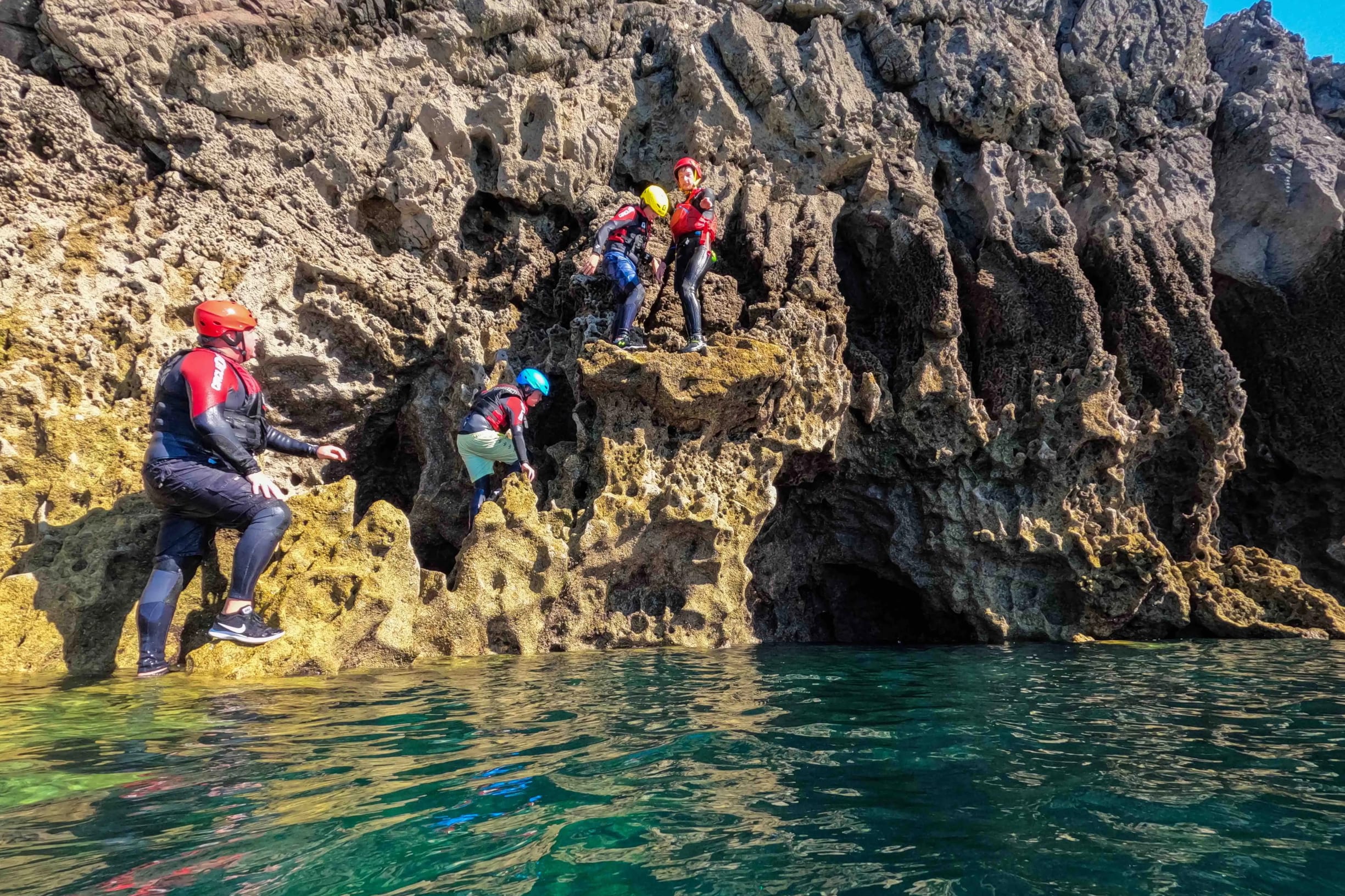
Check out this list of the top 5 most spots to go coasteering in the UK! Enjoy this outdoor activity along beautiful British, Welsh and Irish coastlines.

Check out the 10 best coasteering spots in Europe. This new sport like canyoning, involves cliff jumping, swimming, abseiling and climbing.
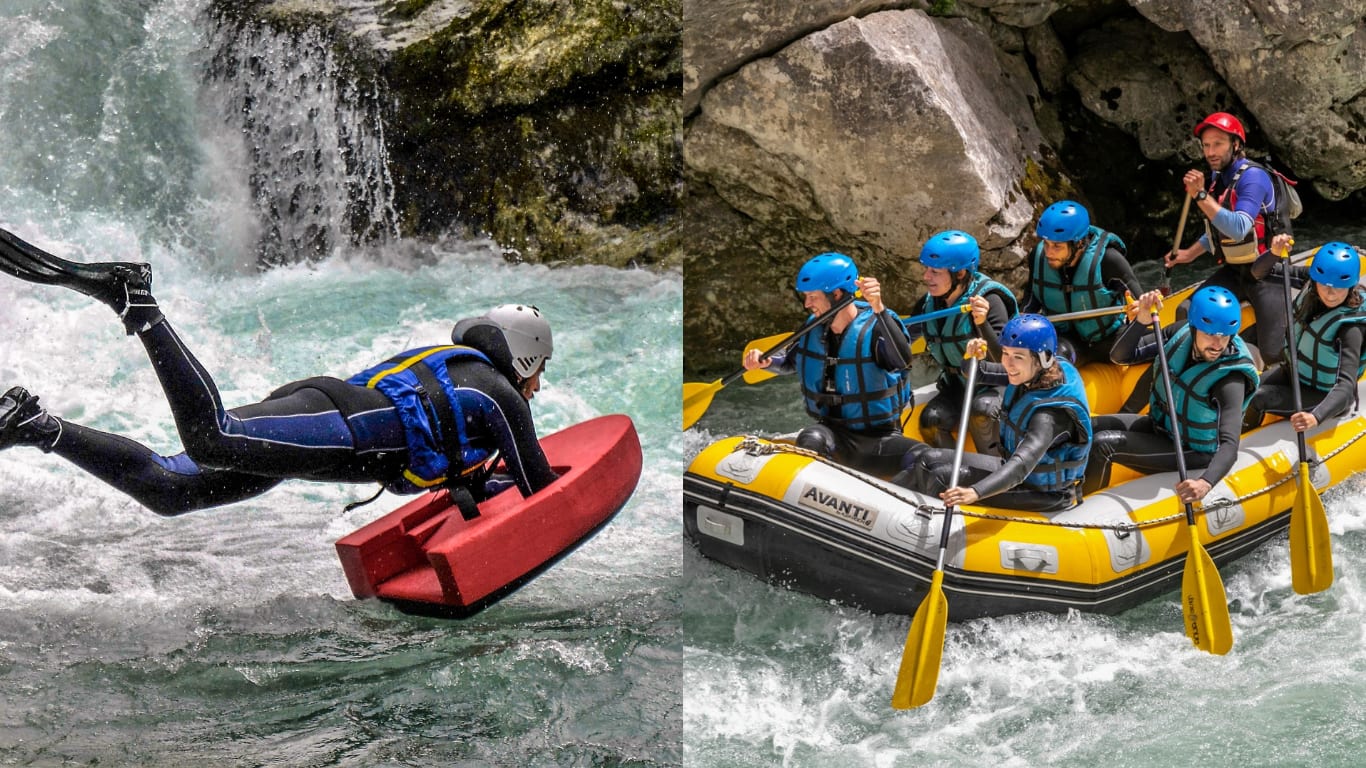
Choosing between rafting and hydrospeed for your next river trip? Discover the key differences to find your perfect whitewater match.
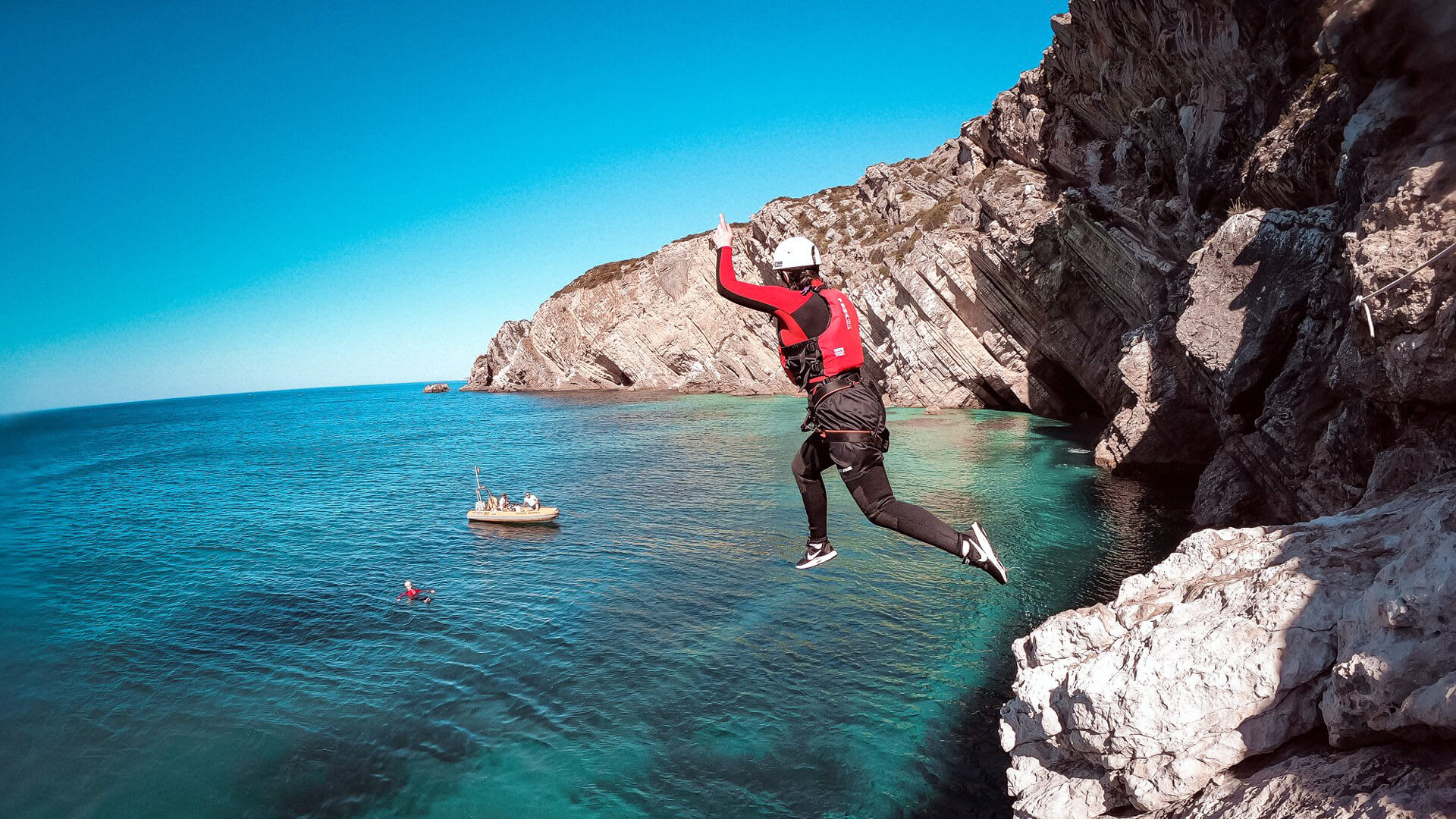
Discover the best national parks for coasteering in Portugal, with cliffs, sea caves, and clear waters perfect for beginners and adventure seekers.
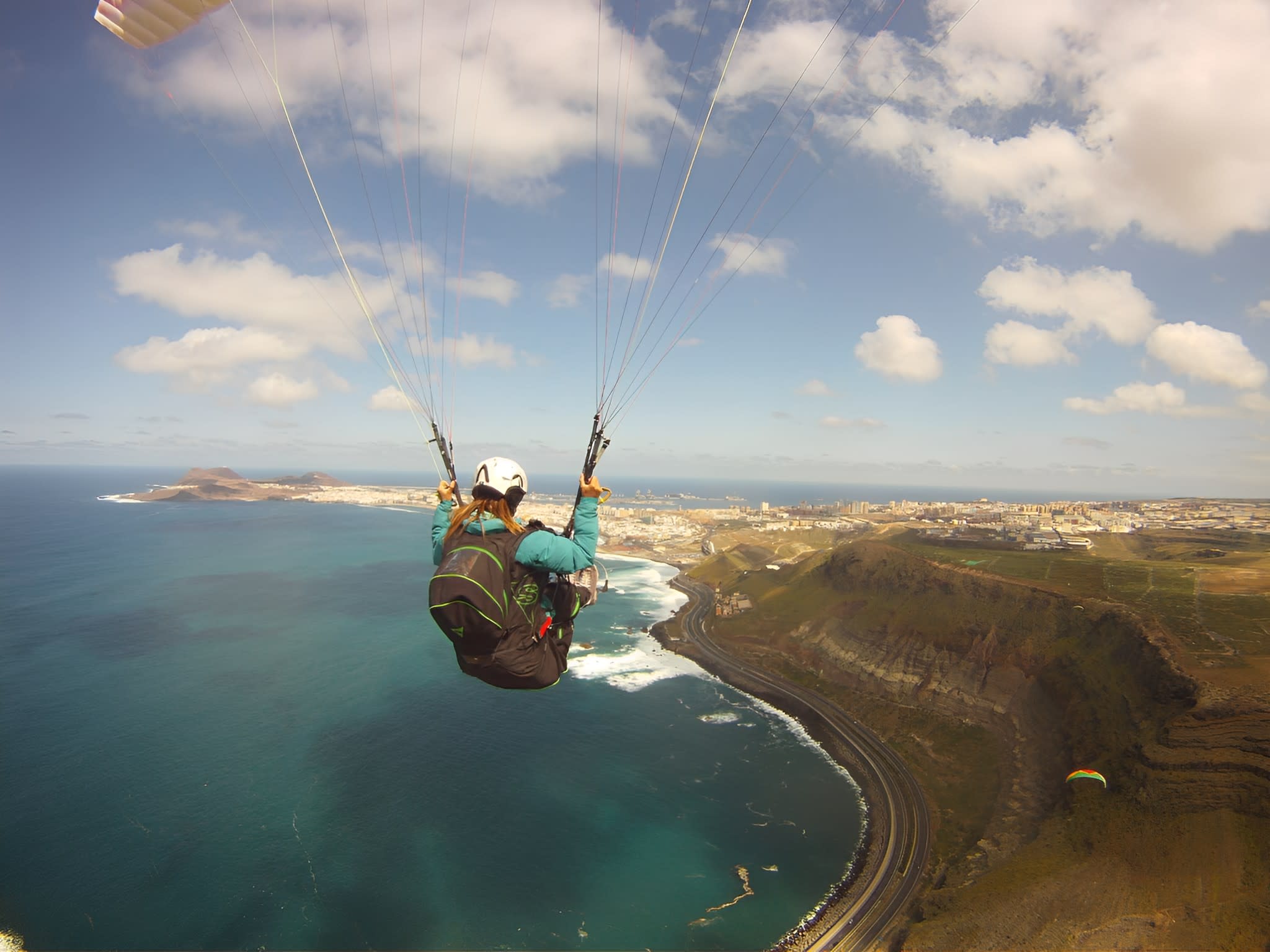
Enjoy Gran Canaria and its activities! Discover its dunes from the air, experience adrenaline-filled adventures and explore like a bird in a paraglider.
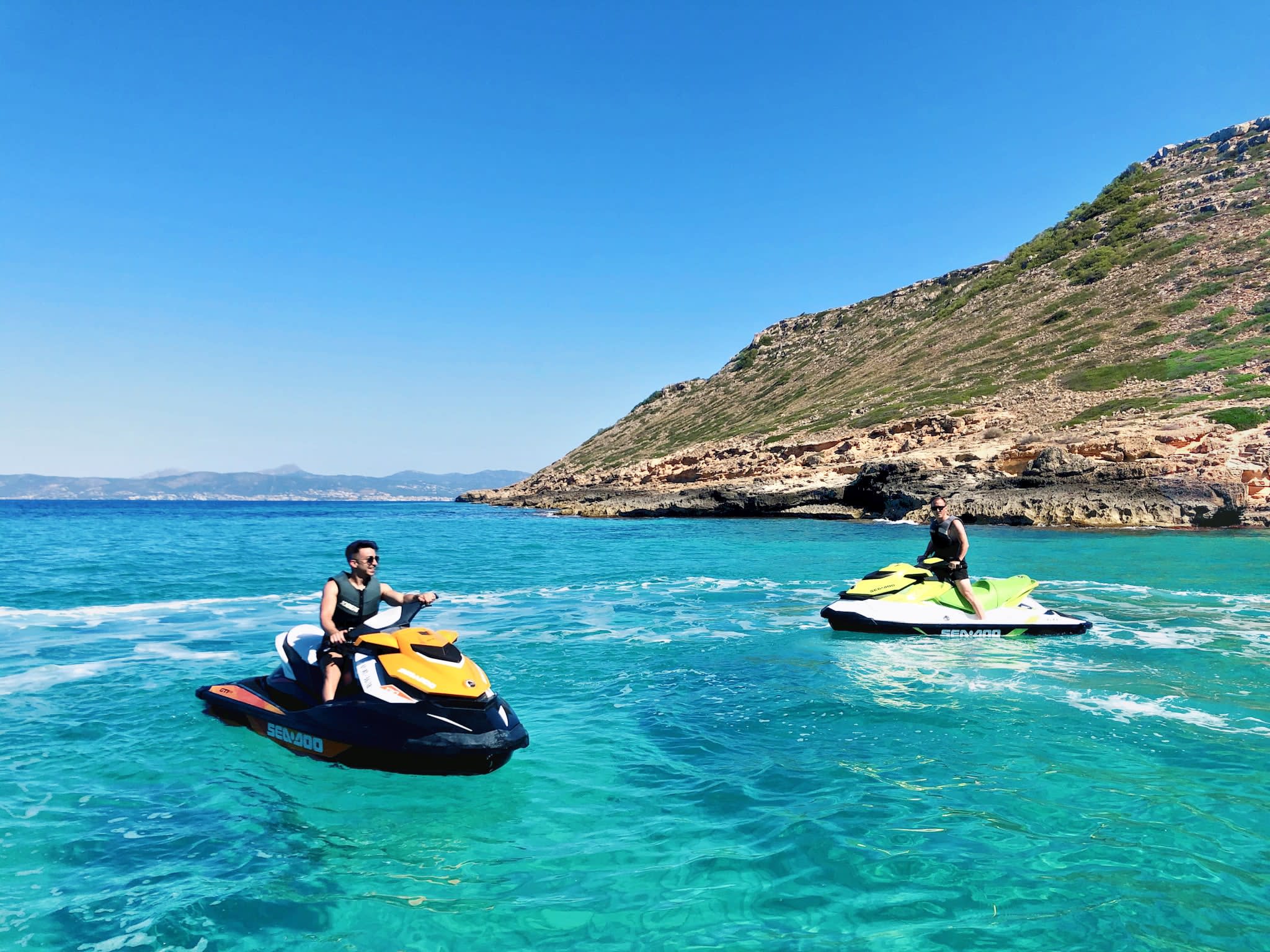
Coasteering, Snorkeling, Jet skiing... Here's our selection of water activities in Mallorca to discover the Balearic Coast at its best.