Manawa & checkyeti join forces: a new era for outdoor adventures in Europe
Discover a new way to explore Europe: checkyeti and Manawa are joining forces to offer even more outdoor adventures across the continent.
At Manawa, one of our main missions is to sell outdoor activities on the Internet. As the leading international platform for booking outdoor activities, we observe the behaviour of many users on a daily basis and see what converts effectively.
Welcome to Manawa, the website for booking outdoor activities around the world. From diving to canyoning, we connect adventure enthusiasts with professional local instructors to guarantee unforgettable experiences.
In concrete terms, 3 criteria will influence your decision as to whether or not to book an activity online:
That said, as with any purchase, travellers compare several activities before booking. If your page isn't clear, reassuring and optimised, they'll simply choose to visit another one. So when it comes to selling your outdoor activities on the Internet, content has become key.
So how about attracting more visitors to your site and turning them into future customers with the power of your pen? As a web copywriter specialising in SEO at Manawa, that's what I do every day, so today I'm going to share with you my tips for selling your business better on the Internet.
To build an effective and attractive web page, form is just as important as content. So you need to look at the architecture of your page, its legibility and the hierarchy of its content.
The top of your web page is the first thing visitors will see. This part of the page must therefore contain a title. To be perfect, the title should be clear and specific, including the sport, the location and a differentiating element. Customers are generally looking for an activity around their specific holiday destination and not in a wider region. So it's best to avoid vague titles, and don't hesitate to include the exact meeting place in the title of the activity. For example, prefer "Canyoning X from [Name of village]" to "Canyoning in the Ardèche". In addition to the title, this header should present key information about your activity that will be immediately visible (duration, level, price, age, years of experience or qualifications) as well as attractive, high-quality photos. The aim is of course to show the action during your activity first, but photos of the briefing, your base or your snack area are just as important. Show the scenery, the highlights of your activity, smiling customers and an available team. These images will allow customers to project themselves into the whole experience.
Further down your page, you can add more information about your business, describing it in greater detail. To help you, here is an example of the structure you should follow to describe and sell your business.
For more advice on structuring your business, read our article on the subject.
Once the structure of your content is clearly organised, you need to work on the content. If you want to turn your readers into future customers, there are 3 elements that absolutely must be mentioned in your text: the benefits of your business, the customer's involvement in the business and reassurance.
When describing your outdoor activity, don't just list the features of the activity as they are. Instead, turn these features into benefits for the customer. For example, after mentioning the duration of your activity, justify why this duration is ideal: "This 3-hour outing will give you plenty of time to enjoy the scenery without excessive fatigue". By doing this, simple technical information becomes an argument for selling your activity.
Just as photos help customers to project themselves into the activity, text can also immerse them in the experience. If you want the reader to imagine themselves doing the activity, don't hesitate to put them in the scene and describe precisely the experience they will have during the activity. It's interesting to describe the sensations (peaceful, sensational, thrilling) and to talk about the emotions felt (pride, surpassing yourself, serenity). Be careful, however, to remain realistic and not exaggerate too much!
Now that customers dream of taking part in your activity to discover your sport and/or the natural setting in which you offer it, you also need to reassure them about the safety aspect. You can go into detail about your safety policy: how often your equipment is checked, how often it is renewed, weather checks before each outing, safety briefing, brand of equipment, etc. All these elements will highlight your professionalism and reassure customers. Of course, beyond the equipment aspect, you'll also need to talk about your team and their qualifications. Be sure to mention the names of their diplomas, the number of years' experience they've had and all the skills and knowledge they bring to the business. And don't hesitate to highlight the personalities of your guides: if one of them has experience of working with children through a BAFA, that's a real plus for a family activity or one aimed at children.
Creating well-structured, complete and well-written content is the basis of all optimisation. Here are some other important points:
Search Engine Optimisation (SEO) refers to all the methods used to optimise a website's presence in the results of search engines such as Google, Bing and Yahoo, without the need for paid advertising. In short, here are a few things to check to ensure that your content is optimised for SEO:
With the emergence of AI, we're no longer just talking about SEO but also GEO (Generative Engine Optimization) when it comes to SEO on LLMs. Indeed, even if this is still very new and everything is changing very fast at the moment, AI is changing the way web users behave and rather than looking for their next activity solely on Google, they are also looking for it on ChatGPT.
If you want to use the new strategic leverage represented by GEO optimisation, here are a few methods you can apply to your site.
Chunking is a strategy that involves cutting up your paragraphs so that they can be read separately from each other while still making sense. Typically, each paragraph focuses on an idea or answers a specific question. This creates content that's easier for LLMs to read, so you're more likely to be cited by AIs. For more details on chunking, take a look at this article from specialist agency Neper: how to write content that's optimised for GEO and SEO?
Easy to read and perfect for answering all your customers' questions, the FAQ section is a real asset for visitors to your page. This section of your page is an opportunity to clarify practical information, reassure beginners who are new to your sport and clarify your cancellation policy. The more complete your FAQ section is, the fewer questions you'll have and the more bookings you'll get. As well as being useful for human readers, FAQs are particularly effective content for GEO (Generative Engine Optimization) because they reproduce exactly the structure favoured by generative AIs: clear questions followed by precise, structured and autonomous answers. Conversational engines analyse content capable of responding directly to queries formulated as questions. A well-constructed FAQ therefore multiplies the opportunities to be taken up or quoted in a generated response, because each "question + answer" block functions as a unit of information that can be used independently of the rest of the page. Here are a few things not to forget in your FAQ: actual duration of the activity, level required, minimum age, meeting place, what is included/not included, contraindications, what the customer needs to bring, languages spoken by your guides, etc.
Today, the quality of your page is just as important as the quality of your business. So here's a final checklist of 4 actions you can take right now to improve your content: ☐ Take quality photos showing your business and its overall experience
☐ List relevant places of interest to include in your content (view of a summit, town closest to your activity etc)
☐ Mention your team's exact qualifications, language skills and years of experience on your site.
☐ Prepare a list of relevant questions for your FAQ (don't hesitate to base it on the questions you often receive) So all that's left for you to do is use these tools to create selling, optimised content while following the advice listed in this article. Of course, if you'd like us to help you, our teams are available and will be happy to rework your pages on Manawa. Contact us at [email protected]
Passionate about outdoor activities, I'll be sharing my tips and tricks to help you discover a destination or sport in the best possible way!
Discover a new way to explore Europe: checkyeti and Manawa are joining forces to offer even more outdoor adventures across the continent.
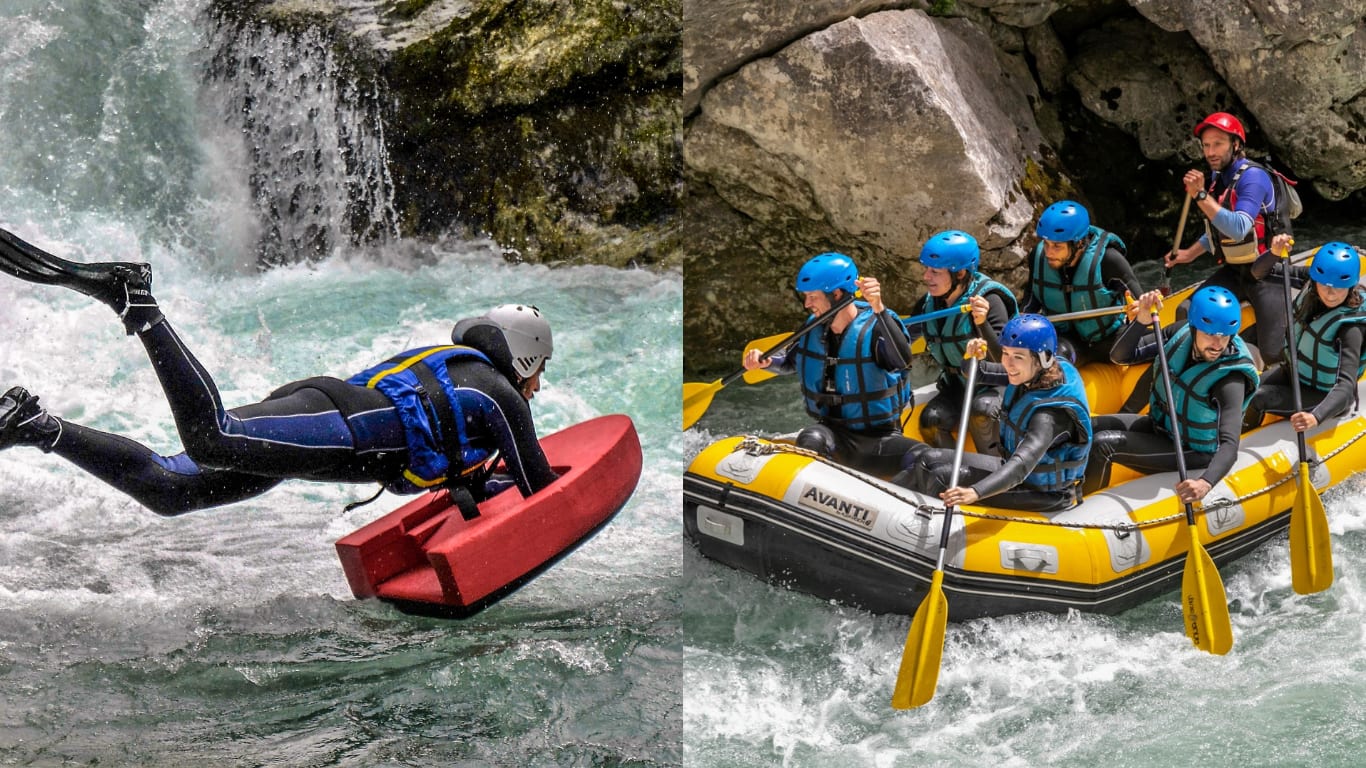
Choosing between rafting and hydrospeed for your next river trip? Discover the key differences to find your perfect whitewater match.
Activity couldn't go ahead? Trigger a full refund directly from your back-office in 3 clicks, no email, no waiting. The quick and complete guide.
Accept, reschedule or decline a request, and find your customers' contact details, everything you can do from the Bookings tab in your back-office, in just a few clicks.
Master the hiking essentials with this complete beginner's guide. Learn how to choose the right trail, pack smart, and stay safe while exploring the best hiking spots.
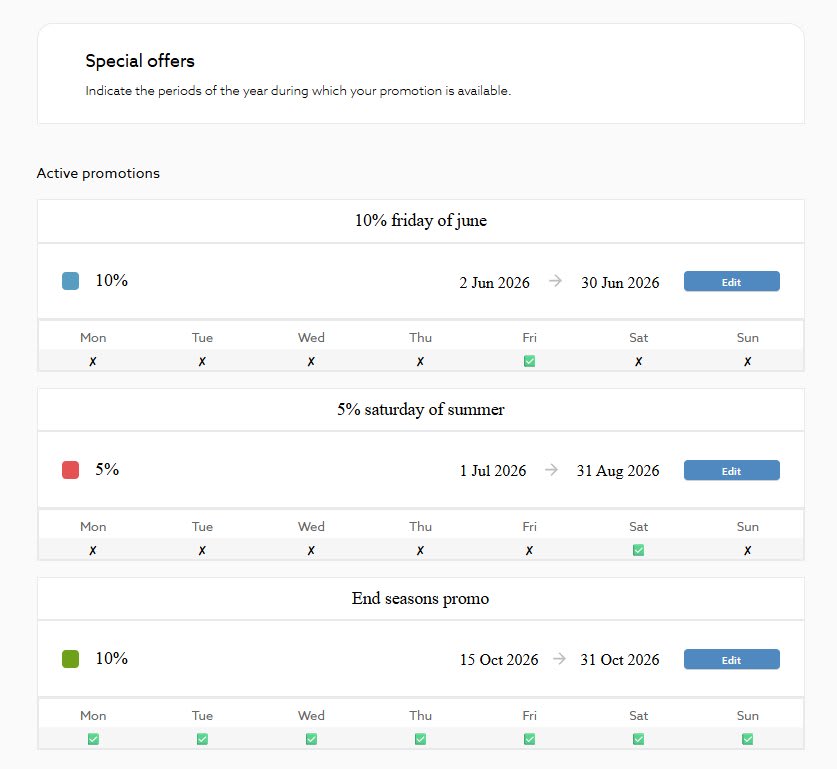
Fill your quiet slots and display a crossed-out price on your Manawa page in just a few clicks. The complete guide to creating, managing and optimising your promotions, available to